

Can Electric Gates Be Forced Open? Security Explained
An electric gate looks like a solid barrier, and most of the time it behaves like one. But homeowners considering the investment reasonably want to know the limits of what they are buying. Can electric gates be forced open, and if so, where is the weakness? The honest answer is that a well-specified gate is a serious deterrent, and that the vulnerabilities that do exist are mostly about specification and maintenance rather than about the concept. Understanding which areas matter lets you close them, and none of the fixes are exotic.
Can Electric Gates Be Forced Open? The Honest Answer
A powered gate resists being pushed because the drive mechanism holds it in position. On a rack-and-pinion or screw-drive operator, the gate cannot simply be slid aside while the drive is engaged, and forcing it means overcoming the operator or damaging the gate itself. That is a loud, slow, visible activity, which is exactly what deterrence is supposed to produce.
What that does not mean is that the gate is impenetrable. Security is layered, and a gate is one layer. The realistic goal is not to make entry impossible but to make it slow, noisy and obvious enough that it is not worth attempting — and to make sure the gate is not the easiest way in. In practice, the weak points below have far more to do with how a gate was specified and maintained than with any clever technique.
Where Electric Gates Are Actually Vulnerable
Three areas account for nearly all of the genuine weaknesses, and all three are addressable at the specification stage or during routine service.
The Manual Release
Every automated gate must have a way to disengage the drive so it can be moved by hand during a power failure. This is a safety requirement, not an optional convenience, and emergency services depend on it. It is also, by definition, the mechanism that allows the gate to be opened without power — so where it is located and how it is protected is the single most important security decision on the whole installation.
How the Release Is Meant to Work
The release disengages the motor from the gate so the panel can be moved freely. The design question is simply who can reach it, and installations differ considerably in how they answer that.
Interior-Only Release
The most secure arrangement puts the release inside the property, reachable only once you are already through the gate or from within the grounds. Nothing on the street side gives access to it. The trade-off is practical: if you arrive home during an outage and the gate is closed, you need another way in before you can release it.
Exterior Key Release
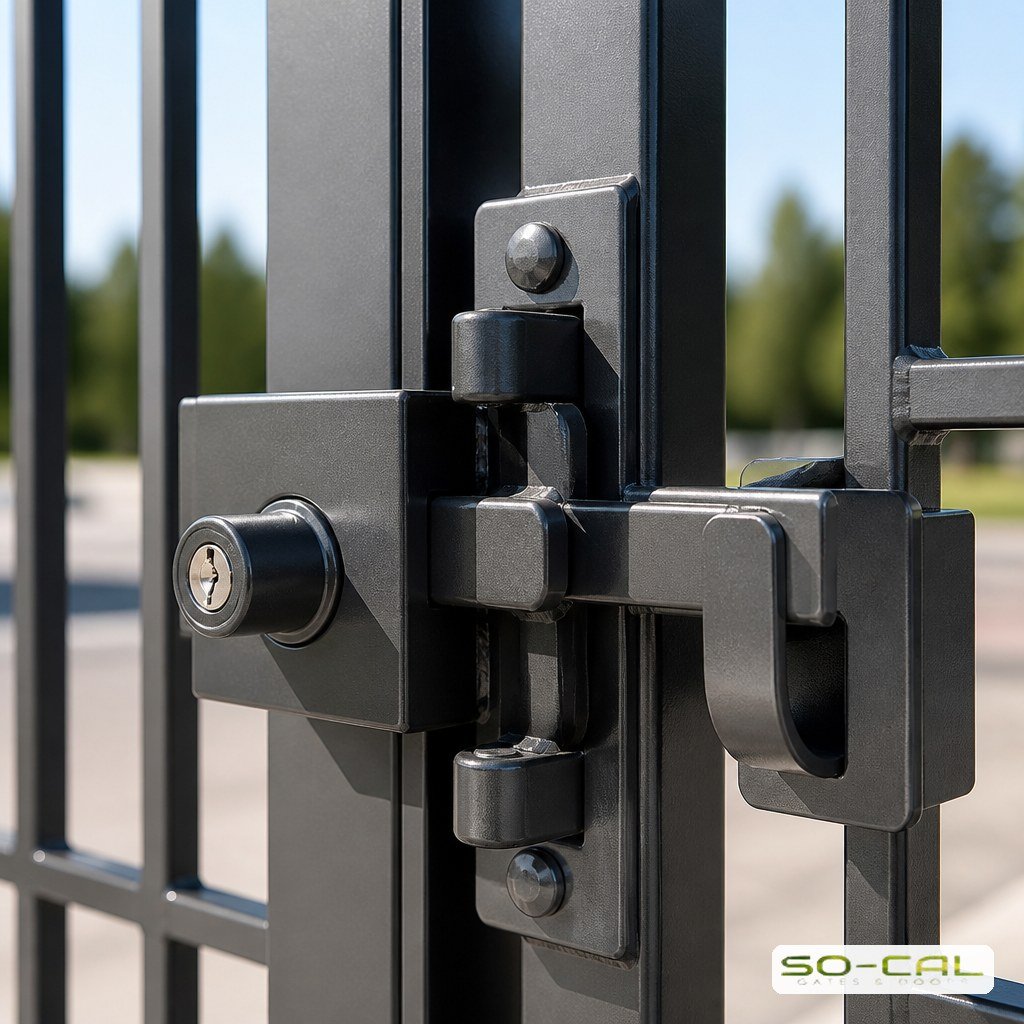
The common compromise is a key-operated release accessible from outside, usually in a lock box or a keyed housing. It solves the practical problem completely and introduces a lock that has to be worth something. A quality, pick-resistant lock in a solid housing is a genuine obstacle; a cheap one bolted to a thin cover is the weakest link in an otherwise strong installation.
The Trade-off Nobody Explains
This is the decision most installers make on the customer’s behalf without discussing it, and it deserves an actual conversation. If access during an outage matters to you, take the exterior release and spend properly on the lock and its housing. If security is the overriding concern and you have another way onto the property, keep the release inside. Either choice is defensible; what is not defensible is an exterior release protected by hardware nobody thought about. Upgrading that hardware is one of the cheapest meaningful improvements available, and it sits naturally alongside proper gate lock service.
Power Loss and Battery Backup
Cutting power to a gate does not fling it open, but it does change how the system behaves. Without backup, the gate stops responding to keypads, intercoms and remotes, and depending on the configuration it may fail in a state you did not intend. A battery backup keeps the gate operating through the kind of short outage that is common enough here in summer, which removes the incentive to interfere with the supply and keeps the entrance usable for you.
It is worth confirming what your specific installation does when power is lost, because installers configure this differently and the answer is rarely written down anywhere the homeowner will find it.
The Gate and Posts Themselves
The least glamorous vulnerability is structural, and it is the most common one in practice. A gate is only as strong as what it is hanging on. Undersized posts, shallow footings, light-gauge frame sections and thin hardware all mean the barrier can be defeated by force applied to the structure rather than to the mechanism. This is where thin-wall stock gates fail: the operator is fine and the frame simply distorts.
Nothing about this is fixable after the fact without real cost, which is why the gauge of the frame, the size of the posts and the depth of the footings are worth asking about before a gate is built rather than afterward. A vehicle-resistant installation is a different specification again, and if that is the requirement it needs to be stated at the start.
What Actually Deters an Intruder
Deterrence works by making a property look like more effort than the alternatives, and gates contribute to that mainly through visibility and delay rather than through absolute strength.
- A solid, well-maintained gate that clearly is not decorative
- Lighting across the entrance, so approach happens in full view
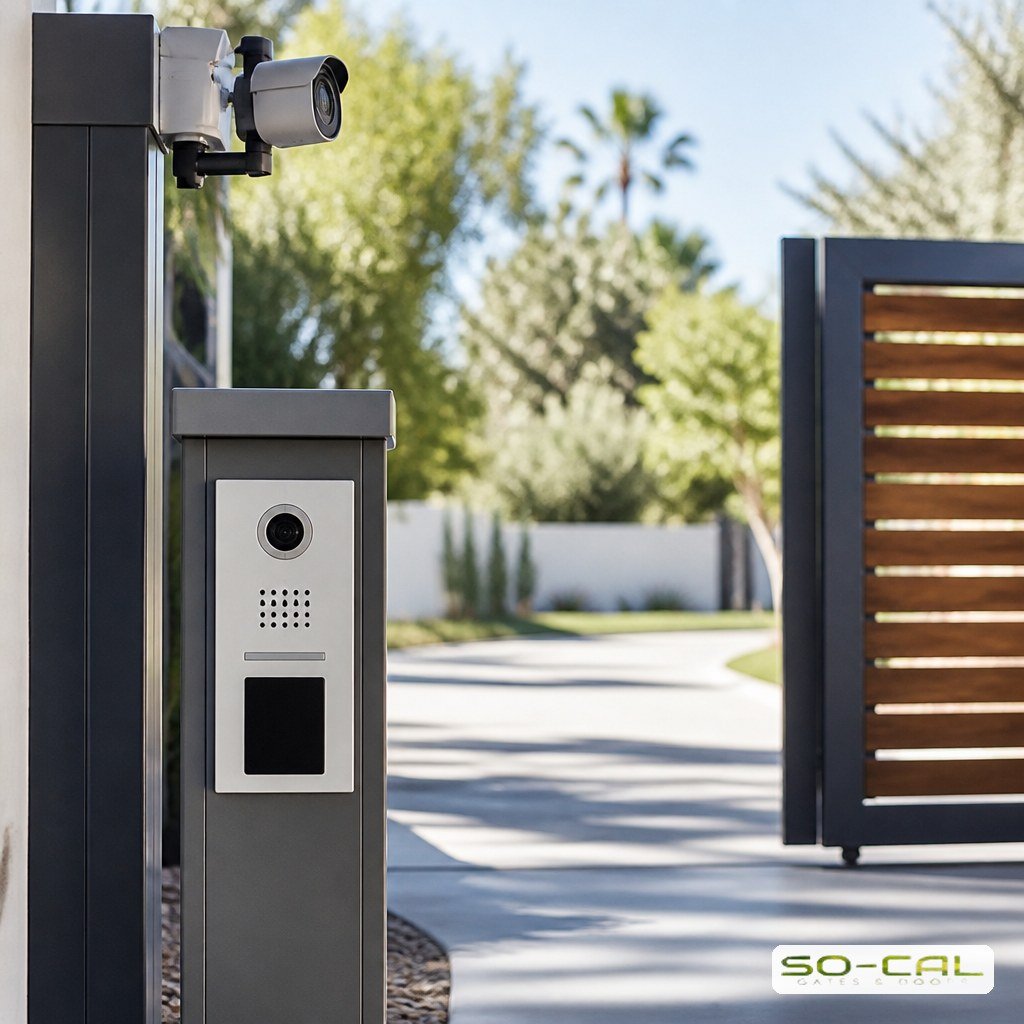
- A visible camera covering the gate and the approach to it
- Quality locks on any externally accessible release
- Battery backup, so a power cut does not disable the entrance
- No obvious gap alongside the gate that makes it pointless to attack at all
That last point is the one most often missed. A serious gate next to a low fence or an open side return is protecting a doorway in an open field. Perimeter and gate should be specified as one thing, and cameras and entry control genuinely change the calculation because they turn an anonymous approach into a recorded one. Integrating those properly is the job of access control systems and matching security system installation rather than of the gate alone.
Conclusion: Specify It Properly and It Does Its Job
Electric gates are a strong deterrent, and the weaknesses that exist are concentrated in a few predictable places: the manual release and the lock protecting it, what happens when power is lost, and whether the frame and posts were built to resist force. All three are specification and maintenance questions with straightforward answers. If you want an honest assessment of where your current gate is weakest, or you are specifying a new one and want those decisions made deliberately rather than by default, call SO-CAL Gates & Doors for a free security review anywhere in Riverside, Corona and the surrounding area.
Frequently Asked Questions
Can someone just push an electric gate open?
Not while the drive is engaged. The operator holds the gate in position, so moving it means overcoming or damaging the mechanism, which is slow and noisy. Gates that can be pushed aside usually have a drive that has failed, has been left disengaged, or was never sized correctly for the gate in the first place — all of which are worth checking if your gate feels loose.
Does a power cut open my gate automatically?
No. Losing power stops the gate responding to controls, but it does not release it. What varies between installations is exactly how the system behaves and whether it can still be operated, which is why a battery backup is worth having and why it is worth asking your installer what your specific configuration does during an outage.
Is an external manual release a security risk?
It is a considered trade-off rather than a flaw. An externally reachable release solves a real practical problem during outages, and its security depends entirely on the lock and housing protecting it. With quality, pick-resistant hardware it is a reasonable arrangement; with a cheap lock on a thin cover it becomes the weakest point in the whole installation.
Which is more secure, a solid gate or an open-picket gate?
They trade different advantages. A solid gate blocks the view of your property and gives nothing to climb, while an open design lets you and any camera see the approach and gives an intruder nowhere to work unobserved. Neither is universally better, and the right answer depends on your sightlines, your lighting and whether you have cameras covering the entrance.
Will a stronger gate alone secure my property?
Only if the rest of the perimeter matches it. A heavy gate beside a low fence or an open side access simply moves the easiest route rather than closing it. Gate, fencing, lighting and cameras should be specified together, because security is decided by the weakest point rather than by the strongest one.
How often should gate security hardware be checked?
Fold it into the annual service. A technician should confirm the manual release works and that its lock and housing are sound, test the battery backup, check hinges, posts and fixings for movement, and confirm that keypads and intercoms are functioning. Security hardware degrades quietly, and an annual check is what keeps it from being discovered at the wrong moment.