

Commercial Gate Installation: A Guide for Businesses
A commercial gate installation is a fundamentally different project from a residential one, and treating it like a bigger version of a home gate is how businesses end up replacing hardware two years in. Commercial gates cycle dozens or hundreds of times a day, carry liability implications, often need to integrate with existing security systems, and must meet safety standards that homeowners never encounter. This guide covers what actually matters when specifying one.
Why Commercial Gates Are a Different Category
The defining difference is duty cycle. A home gate might open six times a day. A business entrance can see that many cycles in an hour during shift changes or deliveries, and every one of those cycles is wear on a motor, a chain, and a set of rollers. Equipment rated for residential use fails quickly under that load, no matter how well it is installed.
Liability is the second difference. A gate on commercial property interacts with employees, customers, delivery drivers, and vehicles that are not yours. Safety devices, proper signage, and code compliant installation stop being good practice and start being a legal and insurance requirement.
Commercial Gate Installation: Choosing the Right Type
Commercial sites use several gate types, and the right one depends on what you are controlling, how much traffic passes through, and how fast it needs to move.
Slide Gates
Slide gates are the workhorse of commercial entrances. They handle wide openings, tolerate sloped or uneven ground, and their cantilever versions eliminate the ground track entirely, which matters where trucks cross the threshold repeatedly. They are the default choice for yards, warehouses, and industrial sites.
Swing Gates
Swing gates suit narrower commercial entrances with level ground and space to arc open. They present a more traditional appearance, which some businesses prefer for a front entrance, though they cycle more slowly and need clear space that a busy site may not have.
Barrier Arms and High Traffic Options
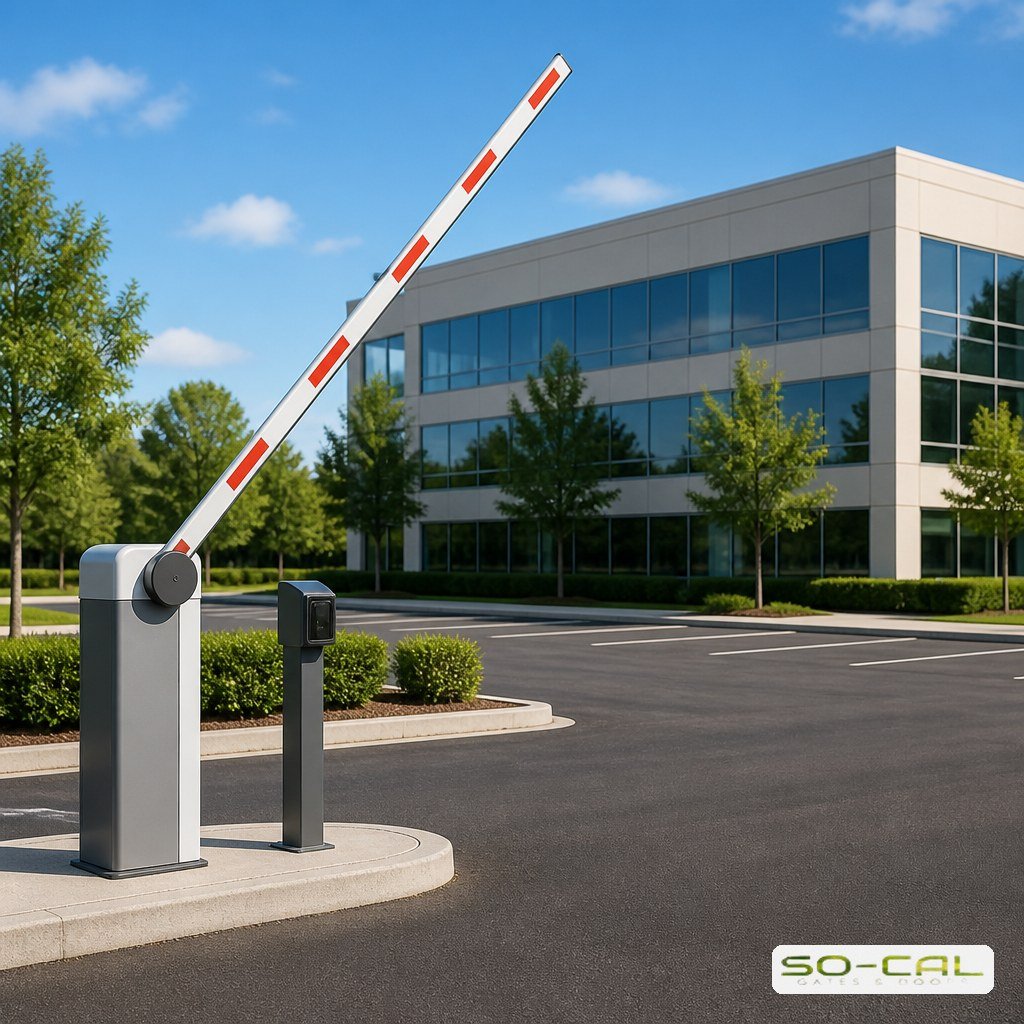
Where the job is controlling vehicle flow rather than securing a perimeter, a barrier arm is faster and cheaper than a full gate. Parking structures, employee lots, and gated communities all use them, often paired with card readers or ticket systems.
Specifying Duty and Speed
Two ratings decide whether the equipment survives, and getting them right is the single most important technical decision in the project.
Duty Cycle Rating
Count the realistic daily cycles at peak, not the average, and specify an operator rated comfortably above that figure. An operator running at the top of its rating in summer heat overheats, slows, and eventually stalls, and no adjustment fixes an undersized motor.
Opening Speed
Speed matters where queuing is a problem. A gate that takes twenty seconds to open is fine at a quiet yard and unacceptable at a busy employee entrance at shift change. Faster operators cost more and demand better safety devices, so specify speed against actual traffic patterns.
The Redundancy Question
For sites where a stuck gate stops the business, consider a backup plan at the design stage: a second entrance, a manual release procedure staff are trained on, or battery backup sized for a full outage. It is far cheaper to plan than to improvise at six in the morning.
Access Control for Business Sites
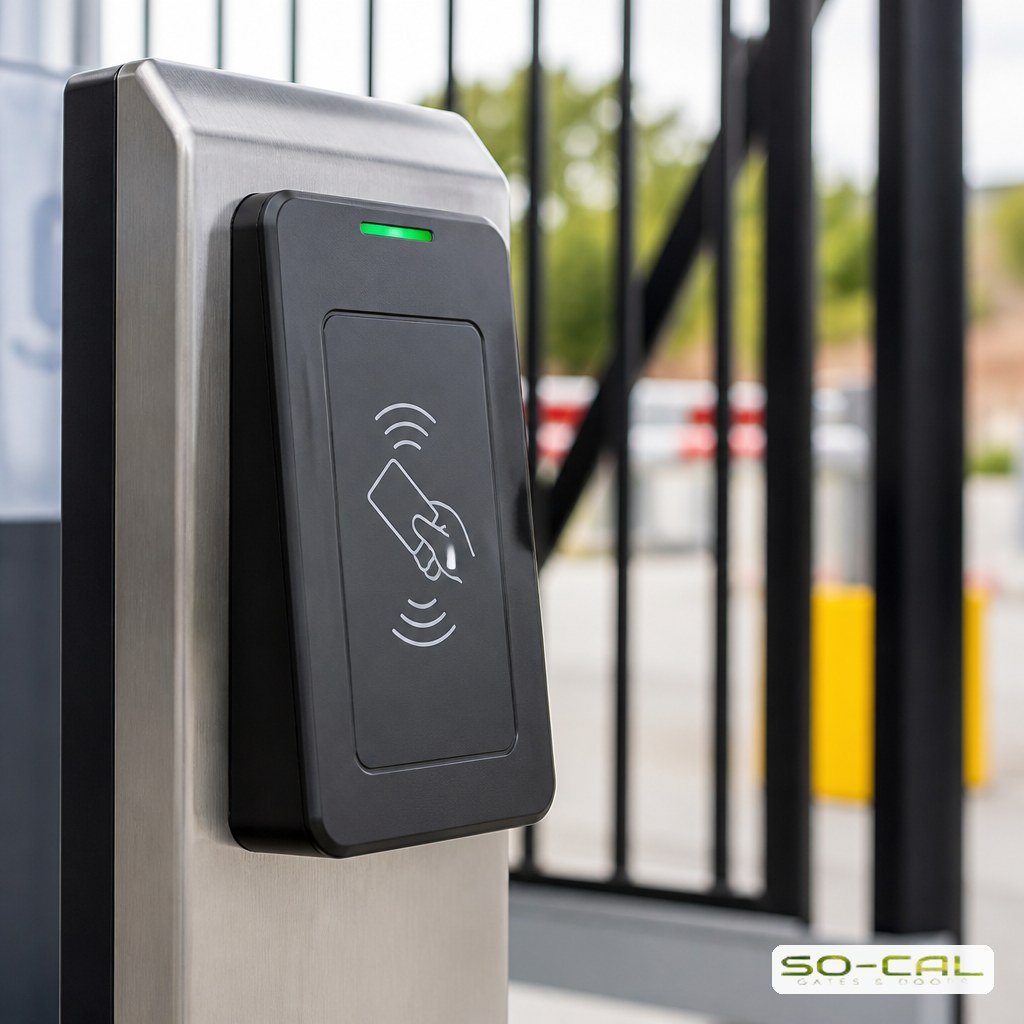
Commercial access control does more than open a gate. It decides who enters, when they may enter, and leaves a record of both. Card and fob readers suit staff, keypads with rotating codes suit contractors, and license plate recognition suits high volume sites where stopping to present credentials creates a queue.
Scheduled access is one of the most useful commercial features and the one most often overlooked. Restricting entry automatically outside business hours, or granting a delivery window to a specific credential, turns the entrance into a managed checkpoint rather than a barrier someone has to operate. Full access control integrates all of this with the operator from day one.
Safety and Compliance
Commercial gates must include entrapment protection, and this is not an area to economise. Photo eye sensors, safety edges on leading and trailing edges, and proper warning signage are baseline requirements, and inspectors and insurers both look for them.
Beyond the devices themselves, installation quality determines whether they actually work. Sensors need correct positioning and alignment, force settings need programming and testing, and the whole system needs verification before the site goes live. A reputable installer documents that testing rather than simply asserting it.
Choosing an Installer for Commercial Work
Residential experience does not automatically transfer. Ask specifically about commercial projects:
- Experience with comparable duty cycles and site types
- Familiarity with current safety standards and local permitting
- Ability to integrate with existing security and access systems
- Service response times, since downtime costs a business money
- Itemized quoting covering gate, operator, safety devices, controls, and labor
Service availability deserves particular weight. A residential homeowner can live with a gate that waits a week for a technician; a business usually cannot. Our team handles commercial gate installation alongside ongoing commercial gate repair for sites across the region, which is the combination most businesses actually need.
Conclusion: Getting Commercial Gate Installation Right
Commercial gate installation succeeds or fails on specification. Match the gate type to the site, rate the operator generously against real peak traffic, plan access control and safety compliance from the start, and choose an installer who can service what they build. Do that and the entrance becomes infrastructure you stop thinking about. Ready to specify a gate for your site? Contact SO-CAL Gates and Doors for a free commercial assessment and detailed quote.
Frequently Asked Questions
How is a commercial gate different from a residential one?
Duty cycle and liability. Commercial gates cycle far more often, so they need heavier operators rated for that load, and they interact with employees, customers, and delivery drivers, which makes safety devices and code compliance a legal and insurance matter rather than a preference.
What type of gate is best for a business entrance?
Slide gates suit most commercial sites because they handle wide openings and uneven ground, with cantilever versions eliminating the ground track where trucks cross. Swing gates work on narrower level entrances, and barrier arms are the efficient choice where the goal is controlling vehicle flow rather than securing a perimeter.
How do I know what duty rating I need?
Count realistic cycles at peak times rather than daily averages, then specify an operator rated comfortably above that number. Shift changes and delivery windows create the load that matters. Undersizing here is the most common cause of commercial gate equipment failing within a couple of years.
What safety features are required on commercial gates?
Entrapment protection is the baseline: photo eye sensors, safety edges on the relevant edges, and proper warning signage. Correct installation matters as much as the devices, since sensors must be positioned and aligned properly and force settings programmed and tested before the site goes live.
How quickly can a commercial gate be serviced if it fails?
That depends entirely on your installer, which is why service response should be part of your selection criteria rather than an afterthought. Downtime at a business entrance costs money and disrupts operations, so confirm response times and availability before you commit to a company.