

Driveway Gate Permit Rules in Riverside County and Corona
Before the first post goes in the ground, most homeowners want to know whether they need a driveway gate permit. It is a fair question, and the answer is rarely a simple yes or no. In Riverside County and in cities like Corona, whether your project needs a permit depends less on the gate itself and more on what goes with it: the height, the structure holding it up, the electrical work behind an automatic operator, and whether your property sits inside a homeowners association. This guide walks through what actually triggers a permit, what an inspector looks for, and how to plan the job so you are not tearing anything out later.
What Triggers a Driveway Gate Permit
A gate on its own is often treated as a fence or a boundary feature. Once you add structure, electricity, or height, the project starts touching parts of the building code that require review. That is the practical dividing line most homeowners run into, and it explains why two neighbors can install what looks like the same gate and end up with completely different paperwork.
It also explains why asking a contractor to simply confirm the requirement before quoting is worth doing. An installer who works in your jurisdiction every week already knows which counter to call and what the local reviewer will focus on, and that knowledge saves far more time than any online checklist.
Height, Structure, and Setback
Height is the first factor a reviewer looks at, because taller barriers carry more wind load and more risk if they fail. The second is what holds the gate up. A gate hung on light posts is a different proposition from one hung on masonry pillars with footings, and the pillars are frequently the part that needs review rather than the gate leaf itself. Setback matters too, since a gate placed too close to the street can create a sight-line or clearance problem for vehicles and emergency access.
Where the Pillars Change the Answer
Masonry columns are the single most common reason a straightforward gate project turns into a permitted one. They are a structure with a foundation, and how they are reviewed depends on how tall and how heavy they are.
Light Posts and Simple Frames
A gate hung on steel posts set in concrete is the simplest case. There is little structure to review, the load path is obvious, and in many residential situations this is handled as ordinary fencing work. It is also the fastest to install and the easiest to adjust later if your driveway is ever regraded or widened.
Masonry Pillars and Block Walls
Once you build stucco or block pillars, you have added a structural element that carries real weight and resists real wind. Footing depth, reinforcement, and the connection between the pillar and the gate hardware all become relevant. This is the point at which most homeowners find themselves filing something, and it is far cheaper to know that before the concrete is poured.
The Detail Most Homeowners Miss
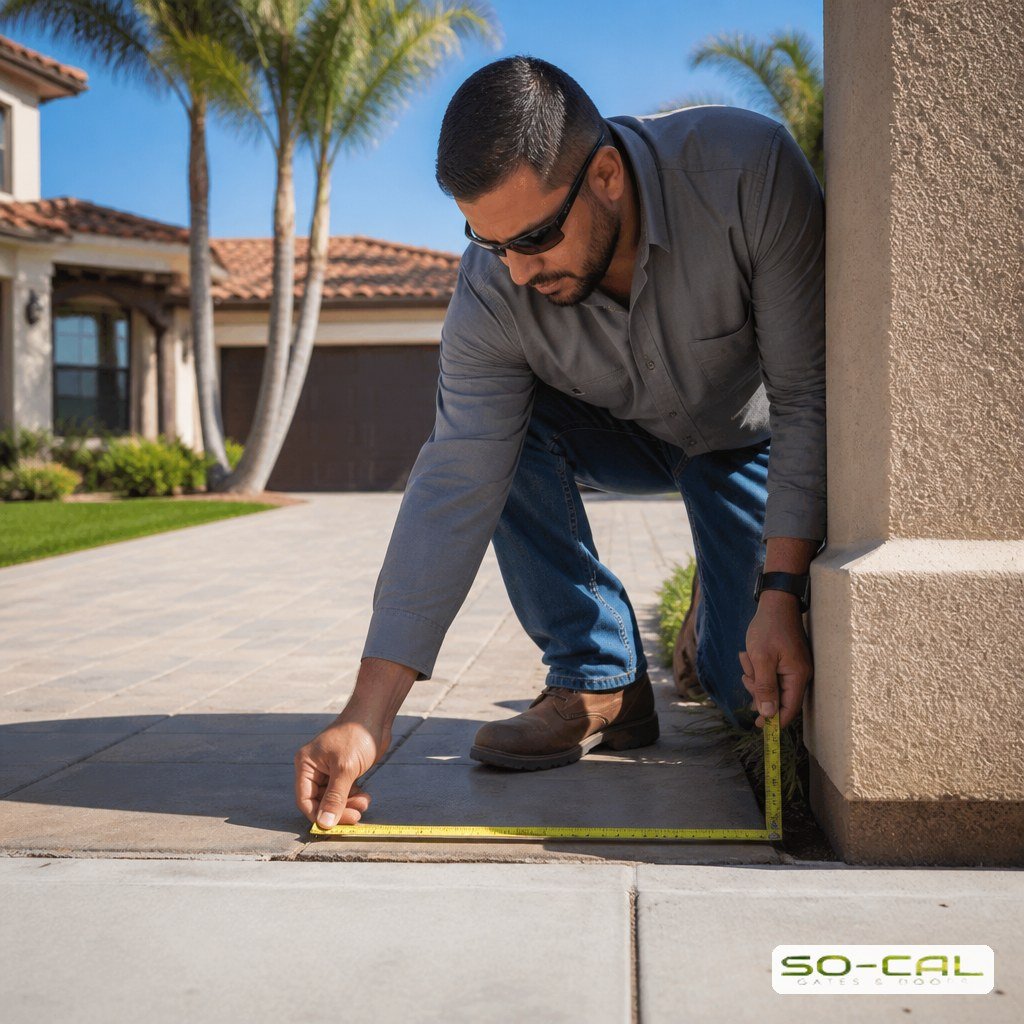
Emergency access is the requirement that catches people out most often. Fire and emergency services need a reliable way through a gate that has lost power, which is why manual release hardware and approved access provisions are not optional extras. Planning for them at the design stage costs almost nothing. Retrofitting them after an inspection costs a great deal more, and it is the most common reason a finished gate has to be reworked.
Automation, Electrical Work, and Safety Requirements
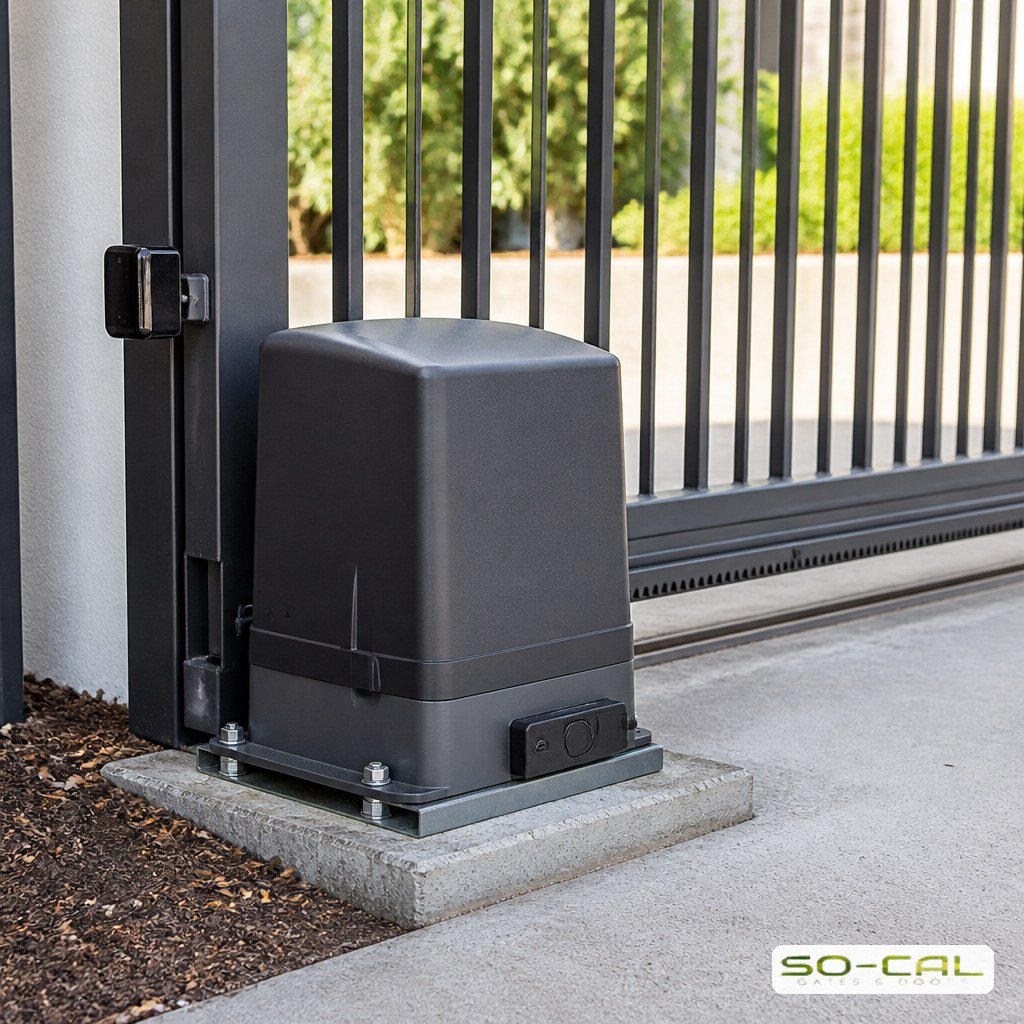
Adding an operator turns your gate into a piece of powered equipment, and that is a meaningful change. Running a new circuit out to the gate is electrical work, and it is reviewed as electrical work. Beyond the wiring, an automated gate has to be built so it cannot injure anyone, which brings in a well-established set of safety requirements that reputable installers follow as a matter of course.
These requirements cover entrapment protection, reversing behavior, the type of operator used for the type of gate, and how the whole assembly behaves when something gets in the way. They exist because automatic gates are heavy and powerful, and the consequences of getting it wrong are serious. Any installer who treats them as optional is telling you something important about how they work.
Sensors, Reversing, and Manual Release
Photo eyes and edge sensors stop and reverse a gate when something is in its path, and they are the components an inspector will actually test. Manual release hardware lets you open the gate by hand during a power cut, which matters for both daily convenience and emergency access. Quality gate opener installation treats these as core parts of the system rather than accessories, and sets them up so they work reliably in the dust and heat of the Inland Empire.
Why the Operator Has to Match the Gate
Operators are rated by gate type, weight, and duty cycle, and using one outside its rating is both a safety problem and a reliability problem. An undersized motor on a heavy gate works for a while, then fails early and often, usually in a way that leaves the gate stuck. Correct sizing at the specification stage is one of the quietest but most valuable decisions in the whole project.
HOA Rules Sit on Top of Everything Else
If your home is inside a master-planned community, your association has its own approval process, and it is entirely separate from anything the city or county requires. Satisfying one does not satisfy the other. Associations tend to care about appearance rather than structure, which means color, material, style, and how the gate reads from the street are all in scope.
The practical order of operations is to get the association’s approval first, because it is the process most likely to change your design. There is no benefit to finalizing a specification that the architectural committee will send back.
- Submit your design to the architectural committee before ordering materials
- Expect rules on material, color, height, and visible hardware
- Ask whether operators, keypads, and intercoms have their own restrictions
- Confirm how long review takes so it does not stall your install date
- Keep the approval letter, since it is often requested later
Neighborhood context matters as well. In established Riverside areas such as Northside and Orangecrest, lot layouts and street frontages vary enough that two homes on the same road can face different setback and clearance considerations. Walking the site with your installer before committing to a design is the simplest way to catch that early.
Conclusion: Plan the Paperwork Before the Post Holes
A driveway gate permit is rarely about the gate by itself. It is about the pillars holding it, the circuit powering it, the safety hardware protecting people around it, and the association rules governing how it looks. Sorting all of that out before anyone digs is what separates a smooth install from an expensive rebuild. Working with an installer who handles Riverside County and Corona projects every week means the requirements are checked as part of the job rather than discovered halfway through. Call SO-CAL Gates & Doors for a free consultation and a clear, itemized plan for automatic gate installation on your property.
Frequently Asked Questions
Do I always need a permit for a driveway gate?
Not always. A simple gate hung on posts is often handled as fencing work, while masonry pillars, greater heights, and new electrical circuits are what usually bring a project into permit territory. Because the rules vary between unincorporated Riverside County and cities such as Corona, the only reliable answer comes from confirming with the jurisdiction your address falls under before work begins.
Does adding an automatic opener change the requirements?
Yes. Running power out to the gate is electrical work and is treated as such, and an automated gate has to meet safety requirements covering sensors, reversing behavior, and manual release during a power outage. These are the elements an inspector is most likely to test, so they should be part of the specification from the start rather than added afterward.
Is HOA approval the same as a permit?
No, and this is the most common misunderstanding. They are two separate processes with different reviewers and different concerns. An association focuses on appearance, materials, and consistency with the community, while a building department focuses on structure, electrical work, and safety. You may need both, and approval from one has no bearing on the other.
What happens if I install a gate without the right approvals?
The usual outcome is rework at your expense. That can mean modifying or removing pillars, redoing electrical work so it can be inspected, or adding emergency access provisions that should have been designed in. It can also create complications when you sell the property, since unpermitted structural work tends to surface during a sale.
How long should I allow for approvals before installation?
Plan for the association review first, since that is the step most likely to change your design and the one you control least. Municipal review timelines vary by jurisdiction and by how busy the counter is. Building a realistic buffer into your schedule is far less frustrating than ordering materials against a date that was never achievable.
Can my installer handle the process for me?
An experienced local installer will know which jurisdiction applies to your address, what the reviewer there typically focuses on, and how to specify the gate so it clears review the first time. That local knowledge is one of the real advantages of hiring a company that works in Riverside and Corona daily rather than one visiting from outside the area.