

Fence Types Compared for Southern California Homes
Choosing among the available fence types is one of those decisions that looks simple until you start comparing them side by side. Wood, vinyl, aluminum, wrought iron, and chain link all fence a property, but they cost different amounts, last different lengths of time, and demand very different levels of attention under the Southern California sun. This guide walks through each option honestly, including what it does well and where it falls short, so you can match the material to your yard rather than to a brochure.
What to Decide Before You Compare Materials
Every fence answers a purpose, and naming yours first narrows the field faster than any material comparison. Privacy calls for solid panels and height. Security calls for strength and difficulty of climbing. Containing a dog calls for gaps narrow enough that they cannot squeeze through. Defining a boundary attractively calls for something open and decorative.
Then be honest about maintenance. Some materials genuinely need attention every few years, and there is no shame in ruling those out if you would rather not spend weekends sealing and sanding. Budget matters too, but consider the lifetime cost rather than the quote alone, because the cheapest fence to install is rarely the cheapest to own across twenty years.
The Main Fence Types Compared
Five materials cover the overwhelming majority of residential fencing in our region. Each has a clear best use case, and knowing which is which saves you from a fence that fights your property for the next decade.
Wood Fencing
Wood remains the most popular choice for backyard privacy, and for good reason. It delivers full visual screening, a warm natural look that suits almost any home, and the lowest entry cost of the solid options. It is also easy to modify, stain in any color, and repair one board at a time.
The trade off is maintenance. Our intense sun degrades untreated wood quickly, and boards can warp, split, or rot where moisture collects. A wood fence needs sealing or staining every few years to stay sound, which is entirely manageable but not optional. Quality wooden fence installation with proper post setting makes a large difference in how long it stays straight.
Vinyl Fencing
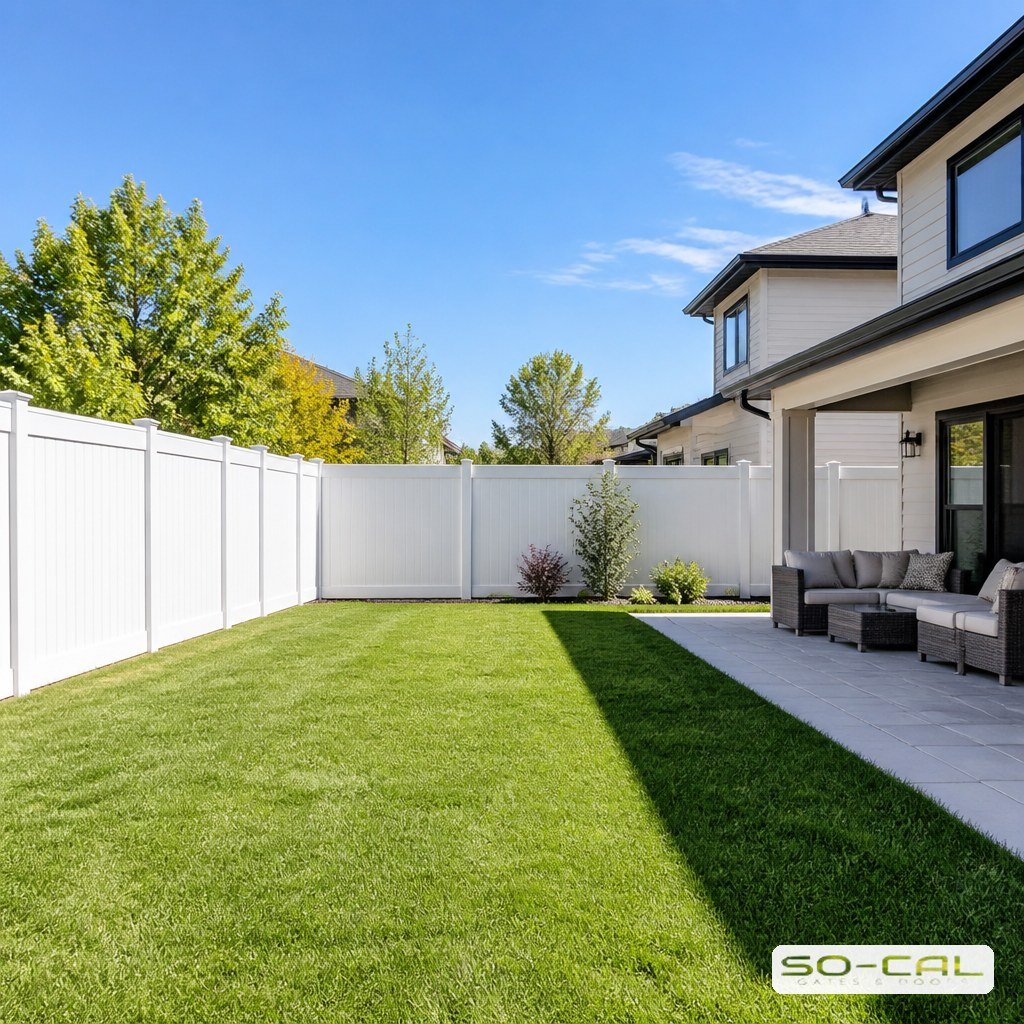
Vinyl is the low maintenance answer to wood. It provides the same solid privacy, never needs painting or sealing, and will not rot, warp, or attract insects. A quick rinse handles almost all of its upkeep, and the color runs through the material rather than sitting on the surface.
It costs more upfront than wood and offers fewer aesthetic options, since you are choosing from manufactured profiles rather than building something custom. Lower grade vinyl can also become brittle after years of UV exposure, which is why material quality matters more here than with most fence types. Good installers specify panels rated for sustained sun.
Metal Fencing
Metal covers several distinct materials that behave very differently, so it deserves a closer look rather than a single verdict. All of them share an open, decorative character that suits front yards, pool enclosures, and boundaries where you want definition without blocking the view.
Comparing the Metal Options
Three metals dominate residential fencing, and the right one depends on whether you are prioritizing strength, freedom from maintenance, or cost.
Wrought Iron
Iron is the strongest and most ornamental option, capable of holding intricate scrollwork that lighter metals cannot. It also rusts wherever its coating fails, so it needs inspection and periodic repainting. Choose it when strength and character matter more to you than freedom from maintenance.
Aluminum
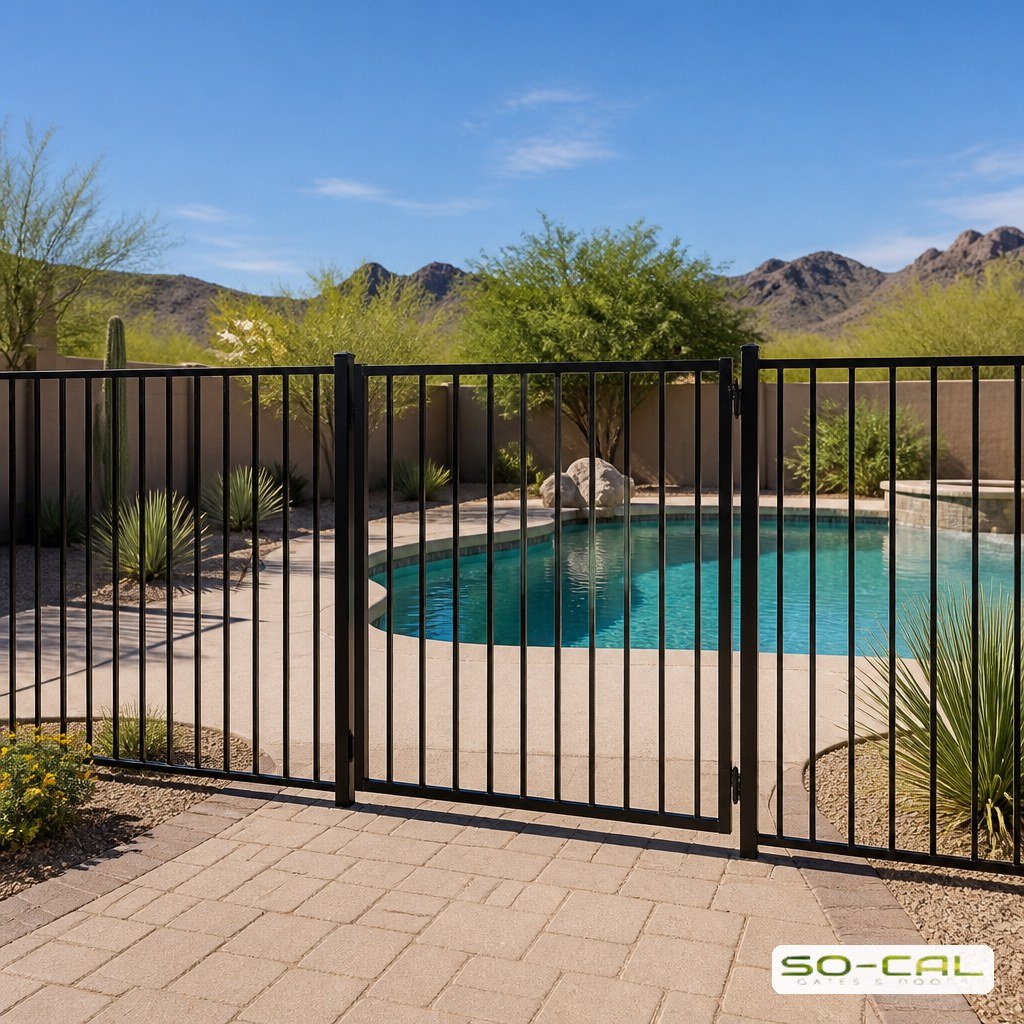
Aluminum delivers a very similar look with no rust at all and almost no maintenance. It gives up some raw strength in exchange, which rarely matters for a decorative boundary or pool enclosure. For most homeowners who want the ornamental look without the upkeep, aluminum fencing is the practical winner.
Steel and Chain Link
Steel sits between iron and aluminum, offering high strength with modern coatings that resist corrosion well. Chain link remains the most affordable way to enclose a large area securely, and while it is rarely chosen for curb appeal, it is unbeatable on cost per foot for side yards, dog runs, and commercial perimeters.
Matching the Fence to Its Job
With the materials understood, the choice usually resolves itself once you name the job:
- Backyard privacy on a budget: wood, or vinyl if you want to stop maintaining it
- Front yard boundary with curb appeal: aluminum or wrought iron
- Pool enclosure that meets safety requirements: aluminum with self closing gates
- Serious security or a large powerful dog: wrought iron or heavy gauge steel
- Large area enclosed affordably: chain link
Many properties use more than one type, and that is a sensible approach rather than a compromise. An ornamental metal fence across the front where everyone sees it, paired with wood or vinyl for backyard privacy, gives you the right material in each place. Our team installs every option across the region and can walk the property with you before anything is ordered, coordinating the result with your existing gates and fencing.
Cost and Lifespan at a Glance
As a general rule, chain link is the least expensive to install, followed by wood, then vinyl and aluminum in the middle, with wrought iron and custom steel at the top. Lifespan runs almost in reverse: a well maintained iron or aluminum fence can outlast several wood fences installed in the same spot.
The most useful way to compare is cost per year of service rather than cost per foot. A wood fence that needs replacing after twelve years and resealing four times along the way often costs more in total than an aluminum fence that simply stands there for twenty five years, which is exactly why the cheapest quote deserves a second look.
Conclusion: Choosing Among Fence Types With Confidence
There is no single best fence type, only the right material for a specific job on a specific property. Name your purpose, be honest about maintenance, weigh lifetime cost rather than the initial quote, and the answer usually becomes obvious. Want a straight recommendation based on your yard, your climate exposure, and your budget? Call SO-CAL Gates and Doors for a free on site consultation and an honest comparison.
Frequently Asked Questions
Which fence type lasts longest in Southern California?
Aluminum and quality vinyl typically last longest with the least effort, since neither rusts nor rots under sustained sun. Wrought iron can match or beat them but only with consistent maintenance. Wood has the shortest practical lifespan here unless it is sealed regularly and kept out of constant sprinkler spray.
What is the most affordable fencing option?
Chain link is the least expensive per foot for enclosing a large area, followed by wood for privacy fencing. Keep lifetime cost in mind though, because wood requires sealing every few years and eventual board replacement, which narrows the gap against vinyl or aluminum over a twenty year period.
Which fence is best for a pool area?
Aluminum is the usual choice for pool enclosures. It resists the moisture and chemicals around a pool without rusting, its vertical pickets meet common safety requirements, and it pairs with self closing, self latching gates. It also keeps sightlines open so you can see the pool area from the house.
Can I combine different fence types on one property?
Absolutely, and many homeowners do. An ornamental metal fence across the visible front paired with wood or vinyl for backyard privacy puts the right material in each location. Keeping colors and heights coordinated is what makes a mixed approach look deliberate rather than piecemeal.
How do I choose between wood and vinyl for privacy?
Choose wood if you want the lowest upfront cost, a natural look, or the ability to stain and customize, and you accept sealing it every few years. Choose vinyl if you would rather install it once and essentially stop thinking about it. Both give full privacy, so the decision comes down to budget versus maintenance.