

Chain Link Fence Guide: Uses, Costs, and Modern Options
A chain link fence has a reputation problem it does not entirely deserve. Yes, it is the most affordable way to enclose a large area, and yes, it will never be the centerpiece of your curb appeal. But for side yards, dog runs, commercial perimeters, and any situation where you need secure enclosure over serious distance, nothing else comes close on cost per foot. And modern coated versions look considerably better than the galvanized mesh most people picture. Here is where it makes sense and how to specify it properly.
Where Chain Link Genuinely Makes Sense
The material earns its place wherever enclosed area matters more than appearance. Large properties, side and rear yards that nobody sees from the street, dog runs, storage yards, and commercial perimeters all suit it well. So do temporary enclosures around construction or equipment, since it installs and removes quickly.
It is a poor choice for front yard curb appeal, for privacy without added slats, and for any situation where the fence is meant to be a design feature. Recognizing that honestly is what makes chain link a smart decision rather than a compromise, and many properties use it out of sight while running ornamental metal across the visible frontage.
Chain Link Fence Specifications That Matter
Three specifications determine whether a chain link fence lasts fifteen years or sags within five, and they are the details most quotes gloss over.
Wire Gauge
Gauge measures wire thickness, and lower numbers mean thicker wire. Residential fencing commonly uses eleven or eleven and a half gauge, while nine gauge is the standard for commercial and security applications. Thicker wire resists deformation and cutting substantially better, and the price difference is smaller than most people assume.
Coating and Corrosion Resistance
Coating determines how the fence ages, particularly around irrigation and in coastal air.
Comparing the Coating Options
Two finishes cover almost all installations, and the choice affects both durability and how the fence looks in your yard.
Galvanized
Standard galvanized mesh carries a zinc coating that resists rust well and costs the least. It has the familiar bright metallic appearance, which reads as utilitarian, and heavier galvanizing meaningfully extends life in wet or sprinkler heavy locations.
Vinyl Coated
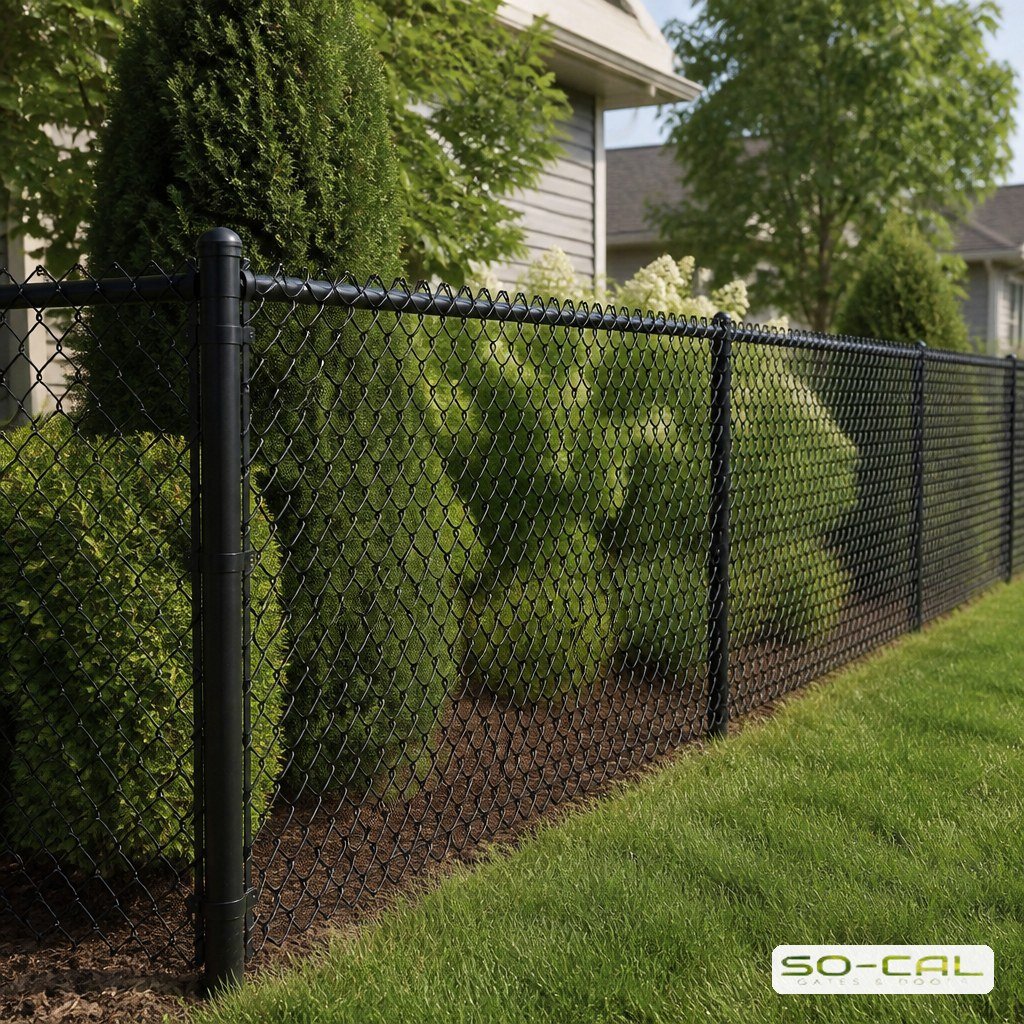
Vinyl coated mesh adds a colored polymer layer over the galvanized wire, most commonly in black or dark green. It resists corrosion better, lasts longer, and looks dramatically better, because dark mesh visually disappears against landscaping instead of announcing itself.
Framework and Fittings
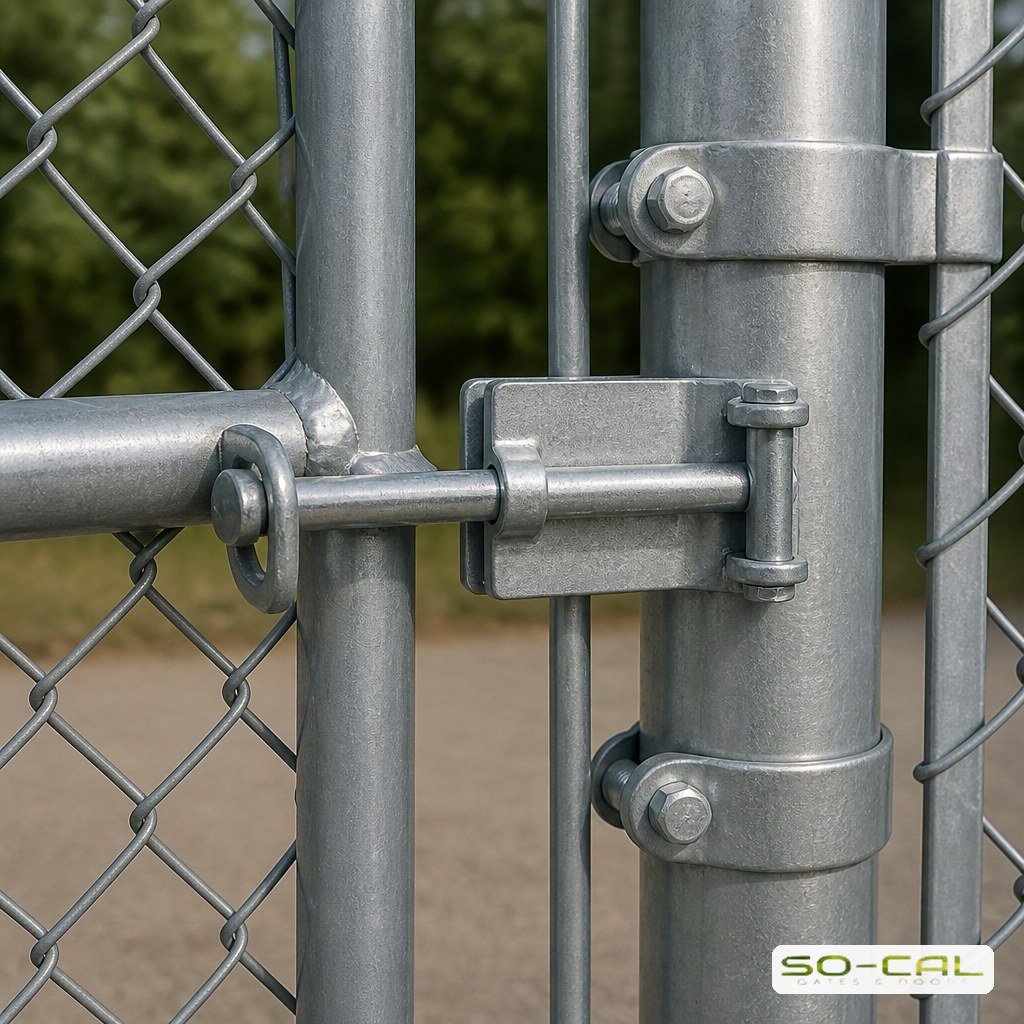
The posts, top rail, tension bands, and fittings matter as much as the mesh. Thin walled posts bend, cheap fittings fail, and a fence is only as sound as the framework holding the mesh taut. Specifying proper post diameter and wall thickness is where a durable installation separates from a cheap one.
Adding Privacy and Improving Appearance
Chain link’s biggest limitation is that you can see straight through it, and there are several practical ways to address that. Privacy slats woven vertically through the mesh block most sightlines and come in colors that coordinate with the coating, though they add wind load that the framework must be able to carry.
Windscreen fabric attached to the mesh achieves similar screening for less money and suits commercial and temporary applications. Landscaping works beautifully too, with climbing plants or a hedge planted along the fence line, provided you accept that greenery against metal traps moisture and shortens the life of the coating.
Gates and Hardware
Gates are where chain link installations most often disappoint, usually because the framework was undersized. A wide gate leaf needs a heavier post and stronger hinges than the run of the fence, and skimping there produces a gate that sags and drags within a season.
For driveway openings, consider whether a chain link gate is really what you want at that spot. Many properties run chain link along the perimeter but install an ornamental custom gate at the entrance, which puts appearance where it is seen and economy where it is not. Our team handles both, along with dedicated chain link fence services across the region.
Height is worth settling early too, since it affects both cost and function. Four feet is common for boundary marking and containing smaller dogs, five to six feet suits security and larger animals, and taller commercial installations often add extensions at the top. Going higher after installation means replacing posts rather than simply adding mesh, so decide before anything is set in concrete.
Cost and Lifespan
Chain link is consistently the least expensive fencing per foot, often by a wide margin against wood, vinyl, or ornamental metal. That advantage grows with distance, which is exactly why it dominates large perimeters where the total footage makes other materials prohibitive.
Lifespan depends heavily on the specifications above. A properly installed vinyl coated fence on adequate framework commonly serves twenty years or more with essentially no maintenance beyond occasional inspection. A thin gauge galvanized fence on undersized posts, sitting in daily sprinkler spray, can look tired in five. The specification decides the outcome far more than the material does.
Installation quality shows up most in how the fence is tensioned. Mesh stretched properly across well set posts stays taut and flat for years, while a loosely hung fence develops waves and sags that no amount of later adjustment fully removes. It is the least visible part of the job at handover and the most visible one five years on.
Conclusion: Using Chain Link Well
A chain link fence is the right answer when you need to enclose real distance securely and economically, and the wrong answer when the fence needs to be a design feature. Specify a proper gauge, choose vinyl coating if appearance or longevity matter, insist on adequate framework, and reinforce the gates. Do that and it will quietly outlast fences that cost several times more. Need a large area enclosed sensibly? Call SO-CAL Gates and Doors for a free estimate.
Frequently Asked Questions
How much does a chain link fence cost?
It is consistently the most affordable fencing per foot, and the advantage grows over long runs. Cost varies with wire gauge, height, coating, and framework quality, plus the number and size of gates. An on site measurement gives an accurate figure, since terrain and post spacing affect the total.
What gauge wire should I choose?
Eleven or eleven and a half gauge suits most residential applications, while nine gauge is standard for commercial and security use. Thicker wire resists deformation and cutting substantially better, and the price step up is smaller than most homeowners expect, so it is often worth taking.
Can a chain link fence provide privacy?
Not on its own, but privacy slats woven through the mesh block most sightlines, and windscreen fabric achieves similar screening more cheaply. Both add wind load, so the framework must be specified to carry it. Landscaping along the fence line is another option, though greenery against metal traps moisture.
Is vinyl coated chain link worth the extra cost?
Usually yes. The polymer layer improves corrosion resistance and extends lifespan, and dark coated mesh looks considerably better because it visually recedes against landscaping rather than standing out. In sprinkler heavy or coastal locations the durability gain alone often justifies it.
How long does a chain link fence last?
A properly specified vinyl coated fence on adequate framework commonly lasts twenty years or more with minimal maintenance. Thin gauge galvanized mesh on undersized posts in constant sprinkler spray can deteriorate within five. Specification and installation quality determine lifespan far more than the material itself.