

Gate Intercom System: Repair, Replace or Upgrade
An intercom is the part of a gated entrance people actually touch, which is why it is usually the first component anyone notices failing. A crackling speaker, a call button that works intermittently, or a handset that has gone silent turns a secure entrance into an inconvenience overnight. This guide covers what goes wrong with a gate intercom system, what is genuinely worth repairing, and what changes when you move from an older analog unit to video or app-based entry — including the questions worth asking before you commit to either.
What Fails in a Gate Intercom System
Intercoms live outdoors, get touched by everyone who visits, and are wired back to a building. That combination produces a fairly short list of failure points, and knowing which one you have determines whether this is a small job or a replacement conversation.
The useful first question is whether the fault is at the gate, at the handset, or in the wiring between them. Each points to a different fix and a very different cost.
The Station at the Gate
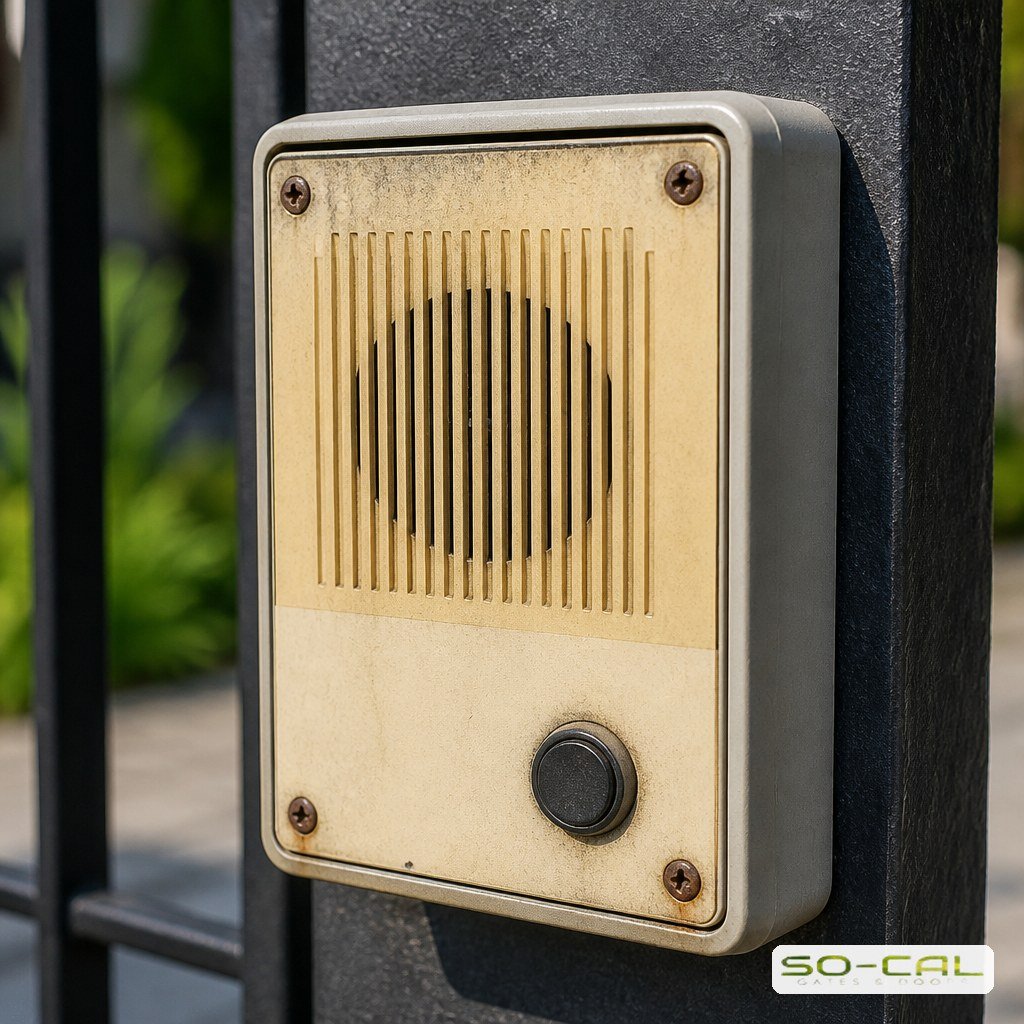
The outdoor station takes the weather and the wear. Speaker grilles corrode, call buttons stop making reliable contact after years of pressing, moisture works into the housing, and sun degrades the plastic until the faceplate cracks. On older units the audio quality drops off gradually rather than failing outright, which is why people put up with a crackling intercom for far longer than they should.
Wiring and Power
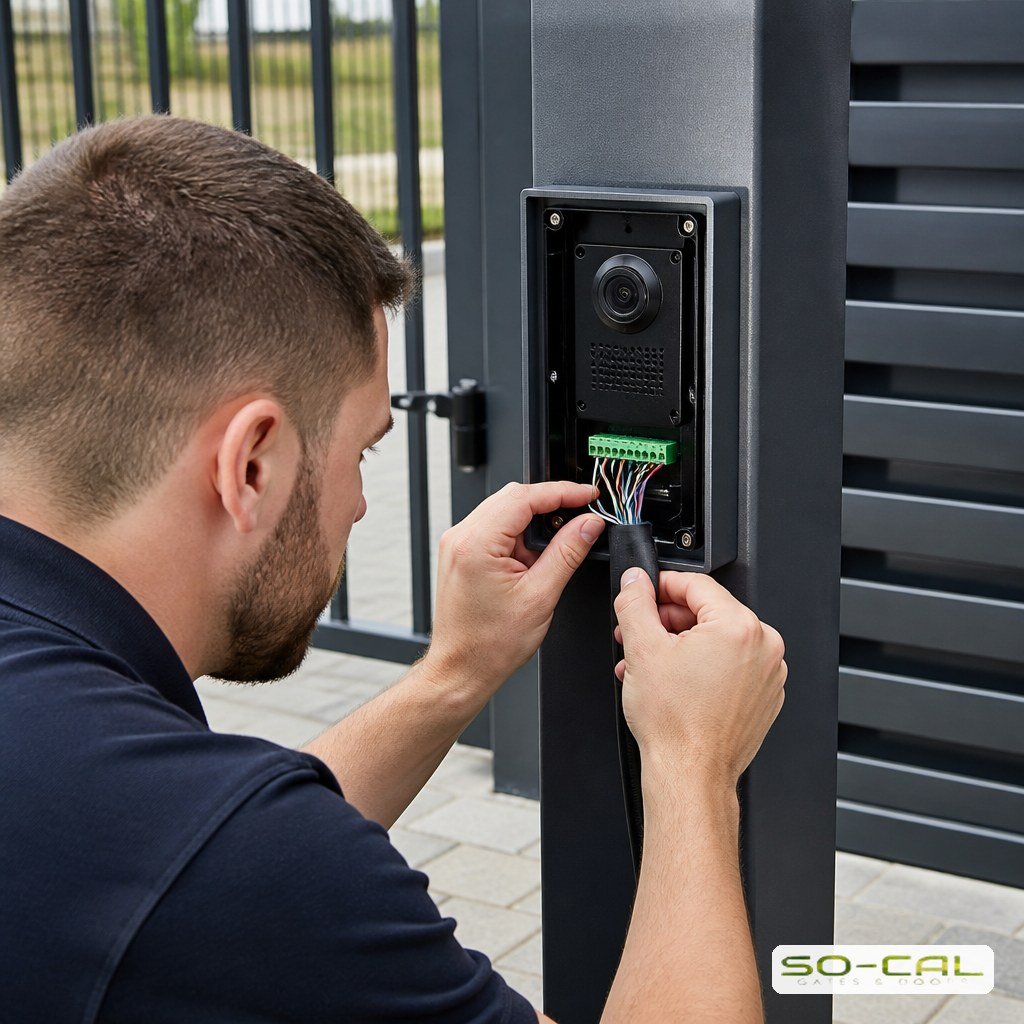
The cable run between the gate and the building is the most common cause of intermittent faults, and the least visible. Buried cable degrades, connections corrode at the terminals, and rodent damage in conduit is more common than anyone expects. An intercom that works sometimes, or works in dry weather and not after rain, is almost always telling you about the wiring rather than the units.
Telling a Repairable Fault From a Dead System
Not every intercom failure justifies replacement, and the deciding factor is usually availability rather than the fault itself.
Worth Repairing
A single failed component on a system that is otherwise current is straightforward work. Call buttons, speaker units, handsets, power supplies and terminal connections are all replaceable, and cleaning up corroded connections at both ends resolves a surprising share of intermittent faults at very little cost. If the system is under about a decade old and parts are still made, repair is almost always the right answer.
Time to Replace
Replacement becomes the sensible route when the manufacturer has discontinued the line and no matching parts exist, when the cable run itself has failed and would need to be re-pulled anyway, or when several components are failing in sequence. At that point you are paying repeatedly to keep a system alive that is going to need replacing regardless.
The Question That Settles It
Ask whether the replacement part is still manufactured. That single question resolves most repair-or-replace decisions on intercoms, because labour is broadly similar either way and the availability of a matching component is what actually differs. If the answer is no, the money spent hunting a used part is better put toward a current system that will be supportable for the next ten years.
Upgrading: Video, Keypads and App-Based Entry
If you are replacing rather than repairing, the range of options has changed considerably since most installed intercoms were specified. It is worth understanding what each adds before defaulting to a like-for-like swap.
Audio-only intercoms still do the core job well and remain the simplest and most reliable choice. Video adds the ability to see who is calling, which is the single most requested upgrade and genuinely changes how the entrance is used, particularly for deliveries. App-based systems route the call to your phone instead of, or as well as, a handset on the wall — which means you can answer the gate from anywhere, and it removes the need for a wired handset inside the building entirely.
What Video Actually Changes
Seeing the caller is not only a security improvement, it is a convenience one. It removes the guesswork from deliveries, it lets you recognize a regular visitor without a conversation, and paired with a recording device it gives you a record of who came to the gate. The practical considerations are lighting and camera position: a camera facing directly into afternoon sun will show you a silhouette, and mounting height matters for both vehicles and pedestrians.
Combining an Intercom With Other Entry Methods
Most entrances end up using more than one method, because different people need different access. Residents use a remote or an app, regular service providers use a code, and visitors use the intercom. A keypad alongside the intercom handles the middle category well, and codes can be changed when a service provider changes. Where the whole entrance is being reconsidered, it is worth planning the intercom, keypad and any card or fob readers together as one access control scheme rather than adding them one at a time, because retrofitting each addition separately costs more and looks it.
Wiring, Retrofits and Shared Entrances
The physical installation is where intercom projects get expensive, and it is the part least visible in a quote. New cable between the gate and the building means trenching or conduit work, which can easily exceed the cost of the equipment itself.
This is the main argument for wireless and cellular-based systems on a retrofit. If the existing cable has failed and re-pulling it means digging up a driveway, a system that communicates over a cellular connection or over the property’s network can be dramatically cheaper to install, even if the hardware costs more. The trade-off is a dependency on signal or network availability, which is worth checking at the gate position before committing.
Shared and multi-tenant entrances are a different problem again. There the intercom has to reach multiple residences, handle a directory, and keep working when one unit changes hands. Those systems are specified around the number of stations and how access is administered rather than around features, and they belong with the rest of the intercom system service for the entrance rather than being treated as a consumer product choice.
Conclusion: Diagnose the Wiring Before You Buy Anything
Most intercom complaints come down to three things: a worn station at the gate, a degraded cable run, or a system old enough that parts no longer exist. The first two are usually repairable at modest cost, and the third is the point at which upgrading makes sense. Before replacing hardware, have the wiring checked — it is the most common cause of intermittent faults and the most expensive thing to rediscover after buying new equipment. For an intercom assessment, repair or upgrade anywhere in Riverside, Corona and the surrounding area, call SO-CAL Gates & Doors for a free evaluation of what your entrance actually needs.
Frequently Asked Questions
Why does my gate intercom crackle or cut out?
Intermittent audio is most often a wiring or connection problem rather than a fault in the units themselves. Corroded terminals at either end, moisture in a junction, or a degraded buried cable will all produce exactly these symptoms. Because it looks like a failing speaker, the units frequently get replaced first and the fault comes straight back.
Can I add video to my existing intercom?
Sometimes, but not usually as a simple add-on. Video needs more bandwidth than an old audio-only cable run was designed to carry, so unless the existing wiring supports it the upgrade generally means new equipment at both ends. Wireless and cellular systems exist precisely to avoid re-cabling, and they are often the more economical route on a retrofit.
Is a wireless intercom as reliable as a wired one?
A hard-wired system remains the most reliable in principle, because nothing depends on signal strength. Modern wireless and cellular systems are nonetheless very dependable, and they become the practical choice when running new cable would mean trenching a driveway. The key is confirming signal quality at the actual gate position before committing, not at the house.
How long should a gate intercom last?
A decade or more is a reasonable expectation for a quality installation, though the outdoor station ages faster than anything indoors because of sun, weather and constant handling. What usually ends a system’s life is not a dramatic failure but parts availability, once the manufacturer stops supporting the line.
Can visitors be let in without an intercom?
Yes, and most entrances use several methods together. Keypads with codes suit regular service providers, remotes and app-based access suit residents, and the intercom exists for people you did not expect. Planning them as one scheme rather than adding them separately gives a cleaner installation and usually costs less overall.
What does an intercom upgrade involve?
The equipment swap itself is the straightforward part. The variables are whether existing cable can be reused, whether a new station fits the current mounting, and whether power at the gate is adequate. A proper assessment checks all three before quoting, because the cabling — not the hardware — is what usually determines the cost of the job.