
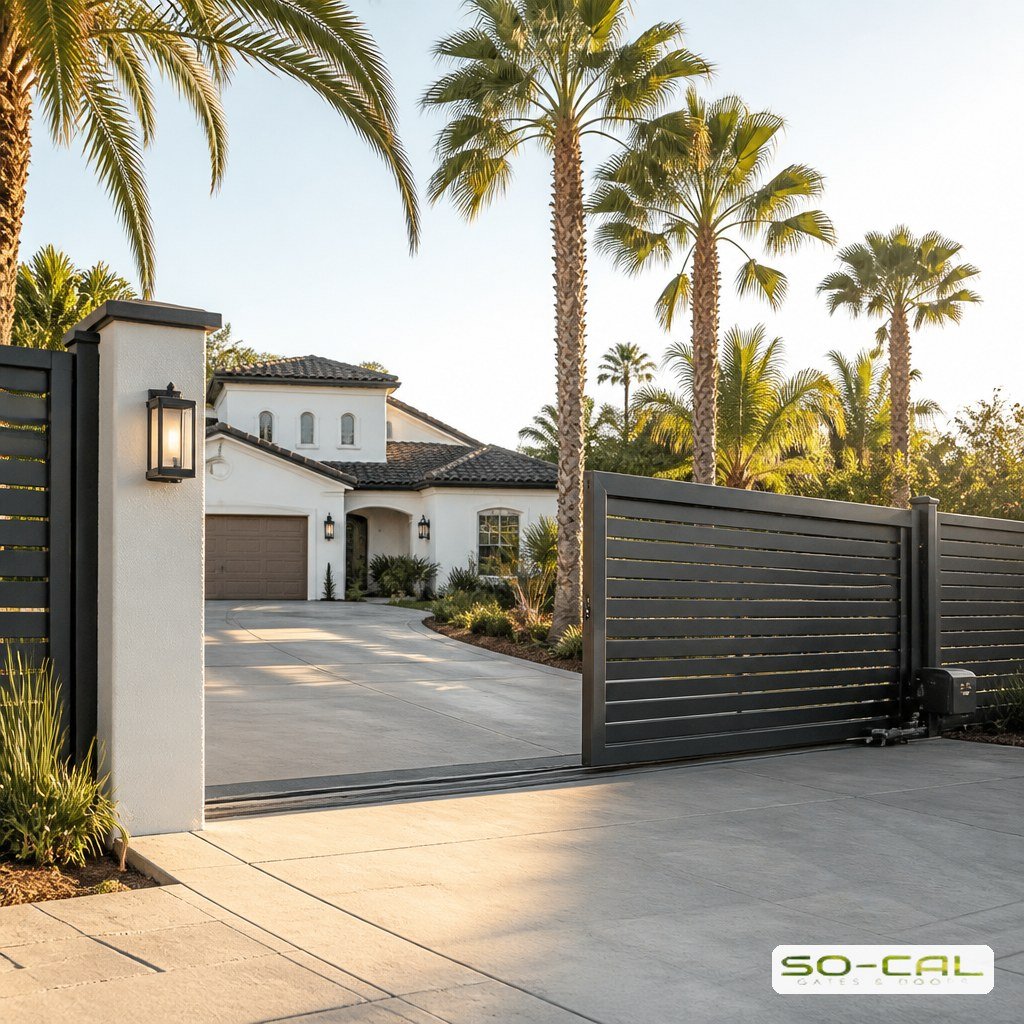
Sliding vs Swing Gate: Which Is Right for Your Driveway?
Choosing between a sliding vs swing gate is the first real decision most homeowners face when adding a driveway gate, and it shapes everything that follows: the cost, the operator you need, how much space you give up, and how the entrance looks from the street. Both styles are excellent when they suit the property, and both become a daily frustration when they do not. This guide walks through how each one works, where each one wins, and how homeowners across Riverside and Corona decide which belongs at the end of their driveway.
How Sliding and Swing Gates Work
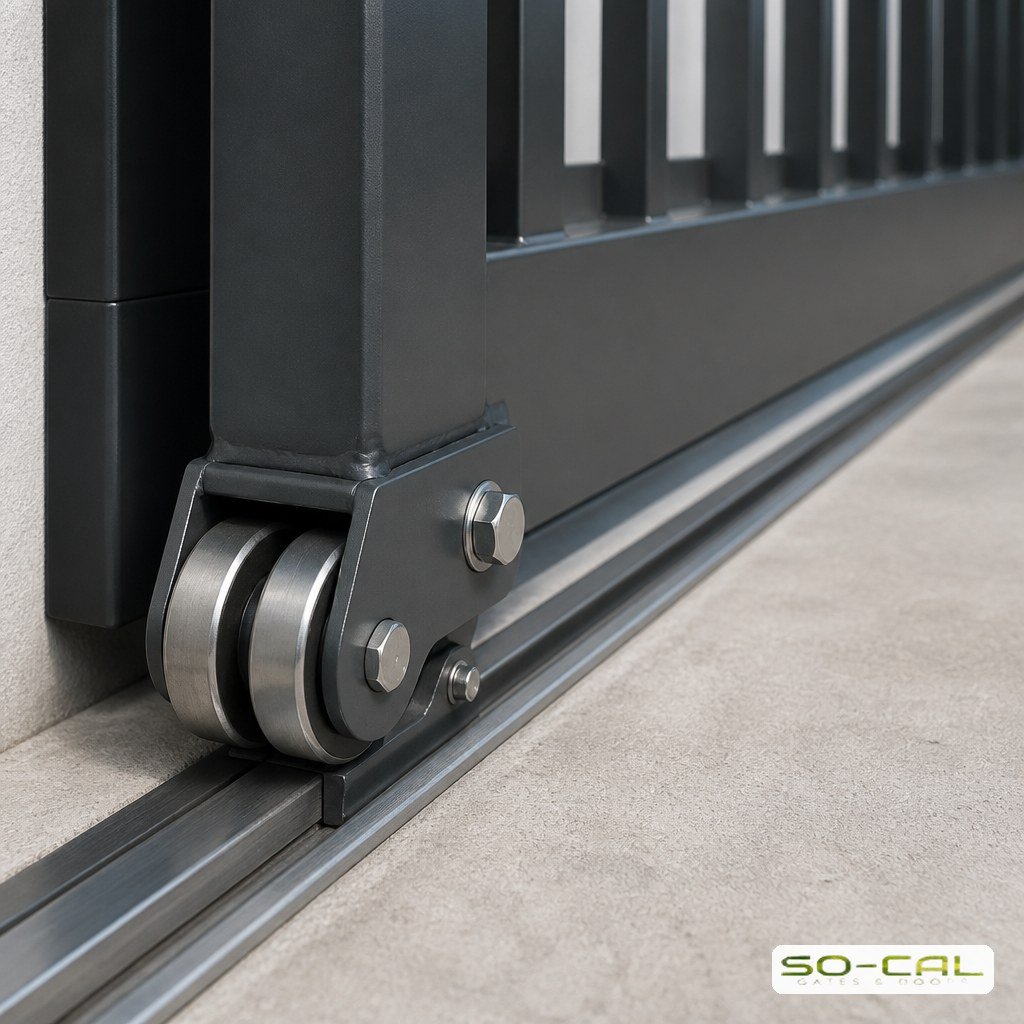
A sliding gate travels sideways across the driveway opening, either riding on a ground track or, in a cantilever design, suspended on rollers so nothing touches the ground. Because it moves parallel to your fence line, it never intrudes into the driveway itself, which is exactly why it thrives on properties where space is tight or the ground slopes away from the street.
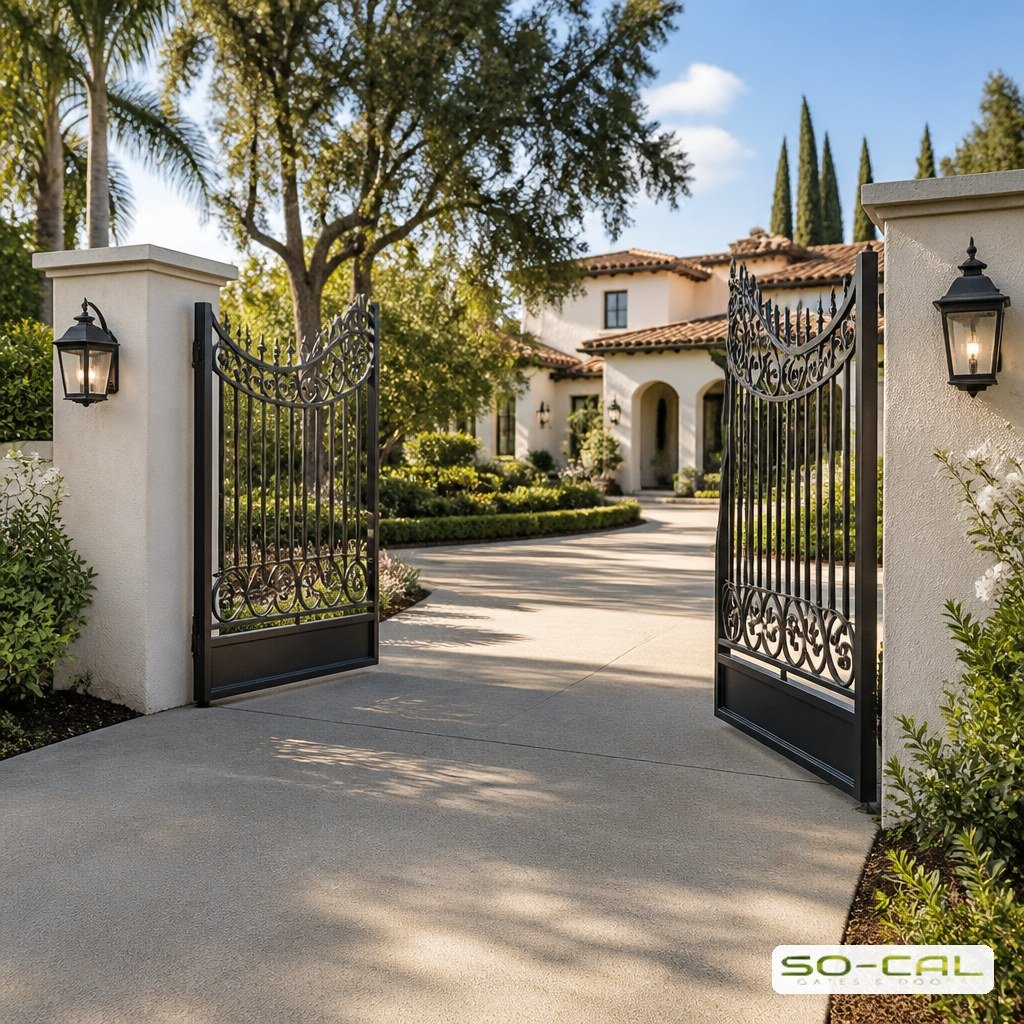
A swing gate works like a large door on hinges, arcing open into your property or out toward the street. Single-leaf versions swing as one panel, while double-leaf versions meet in the middle for a symmetrical, traditional look. The mechanism is simpler and there are fewer moving parts at ground level, but the gate needs a clear, level arc to travel through every time it opens.
Sliding vs Swing Gate: The Key Differences
Once you understand the two mechanisms, the comparison comes down to a handful of practical factors. Space is usually the deciding one, but cost, security, and long-term maintenance all matter, and they often point in different directions for different properties.
Space and Driveway Layout
This is the factor that settles most decisions before any other is considered. A swing gate needs enough clear, level space to complete its arc, and it needs that space to stay clear year round. A sliding gate needs room to one side along the fence line for the panel to retract into, but nothing at all in the driveway.
Matching the Gate to Your Property
Walk your driveway before you shop. Measure the width of the opening, note whether the ground rises or falls as it meets the street, and check how much room sits to either side of the entrance. Those three measurements usually make the answer obvious.
When a Sliding Gate Wins
Choose sliding when your driveway slopes, when the entrance is short and you park close to the gate, or when a wide opening would make swing panels impractically heavy. Sloped ground is the classic case, because a swing gate would either scrape the rising surface or leave a gap under the falling one, while a sliding gate simply travels across it.
When a Swing Gate Wins
Choose swing when your entrance is level and you have generous room on both sides of the driveway. Swing gates deliver the classic estate look that many homeowners want, they cost less to install in straightforward conditions, and with fewer ground level components there is less to keep clear of dirt and debris over the years.
The Awkward Driveways
Some entrances suit neither option cleanly, and that is where specialty mechanisms earn their place. Bi folding gates fold back on themselves in a fraction of the swing space, and vertical pivot gates lift upward entirely. Both cost more, but on a short, steep, or unusually narrow entrance they solve a problem that no standard gate can.
Cost Comparison
On a level property with ordinary conditions, a swing gate is usually the more affordable installation, since it needs less groundwork and a simpler operator. A sliding gate carries more upfront cost because of the track or cantilever hardware and the heavier duty operator that drives it, though the difference narrows once a swing installation requires grading, longer posts, or reinforced hinges.
Look at the lifetime cost as well as the quote. Sliding gates ask for periodic track cleaning and roller replacement, while swing gates put steady strain on hinges and posts that eventually shows up as sagging. Neither is expensive to maintain when the job is done properly, but each has its own long term rhythm of care.
Security and Durability
Both styles secure a property well when they are built to the right specification, so the real difference lies in the details. Sliding gates are difficult to force because the panel is supported along its length and there is no hinge point to attack, which is a large part of why commercial sites favor them. Swing gates depend heavily on the quality of their hinges and posts, and a well built pair with heavy duty hardware is every bit as secure.
Automation Considerations
Each style requires an operator designed specifically for its motion, and the two are not interchangeable. Sliding gates use rack and pinion or chain driven operators that pull the panel along its path, while swing gates use arm or ram operators that push each leaf through its arc. Choosing the wrong category, or an operator undersized for the weight of the gate, is the most common reason a system wears out years earlier than it should.
Whichever style you choose, plan the automation as part of the gate rather than as an afterthought. Getting the operator, safety sensors, and power backup right at the time of installation costs far less than retrofitting them later, and professional gate opener installation makes sure the motor is properly matched to the panel it has to move every day for the next decade.
Making Your Decision
If you are still weighing the two, these questions usually settle it quickly:
- Does your driveway slope at the entrance? Sliding handles it far better.
- Is there clear, level room on both sides? Swing becomes a strong contender.
- Is the opening unusually wide? Sliding manages the span more gracefully.
- Do you park close to the gate? Sliding never intrudes on your driveway.
- Is a classic, symmetrical look your priority? Double swing gates deliver it.
There is no universally better answer in the sliding versus swing debate, only a better fit for your property. A professional site visit removes the guesswork entirely, since an experienced installer reads the slope, the space, and the soil in a few minutes and can tell you which style your entrance actually supports. Our team handles both throughout the area, from full automatic gate installation to matching the new gate with your existing custom gates and fencing.
Conclusion: Choosing the Right Gate for Your Driveway
The sliding vs swing gate decision comes down to your driveway more than your taste. Sloped, short, or space limited entrances favor sliding gates, while level, open driveways make swing gates a beautiful and cost effective choice. Get the mechanism right and the operator properly sized, and either style will serve you reliably for decades. Ready to find out which one fits your property? Call SO-CAL Gates and Doors today for a free on site assessment and an honest recommendation.
Frequently Asked Questions
Is a sliding gate more expensive than a swing gate?
Usually yes on a level property, because sliding gates need track or cantilever hardware and a heavier duty operator. The gap narrows on difficult sites, though, since a swing installation on sloped or uneven ground may require grading and reinforced posts that add cost of their own. An on site quote is the only way to compare accurately.
Which gate is better for a sloped driveway?
A sliding gate, almost always. Swing gates need a level arc to travel through, so on a slope they either scrape the rising ground or leave a gap under the falling side. A sliding gate moves across the opening rather than through it, which makes slope largely irrelevant to its operation.
Which style lasts longer with less maintenance?
Both last for decades when properly built. Swing gates have fewer ground level parts to keep clear, but their hinges and posts carry constant strain and can sag over time. Sliding gates need their track kept clean and rollers replaced eventually. Cantilever sliding gates split the difference by eliminating the ground track entirely.
Can both sliding and swing gates be automated?
Yes, and most residential gates today are. Each style uses its own type of operator, sliding gates with rack and pinion or chain drives and swing gates with arm or ram operators. The critical detail is sizing the motor to the weight and duty cycle of your specific gate, which is where professional installation pays for itself.
Which type of gate is more secure?
Both are secure when built to the right specification. Sliding gates resist forcing well because the panel is supported along its length with no hinge point to target, which is why commercial properties often prefer them. A swing gate with heavy duty hinges and properly set posts provides comparable protection for a home.