

Gate Opener Buying Guide: How to Choose the Right One
Shopping for an automatic gate operator is one of those purchases where the specification sheet matters far more than the price tag, and this gate opener buying guide is built around the four decisions that actually determine whether your system runs quietly for fifteen years or burns out in three. Most openers that fail early were never faulty products. They were simply the wrong opener for the gate they were asked to move, day after day, in the Southern California heat.
Start With Your Gate, Not the Opener
The single most common mistake is shopping for an operator before measuring the gate. Your gate dictates everything: its style determines which category of opener can move it at all, its weight and length determine how much power you need, and how often you use it determines how hard that motor will work over its lifetime.
Before you compare a single model, write down four numbers. How wide is the gate, how much does it weigh, is it a slider or a swing, and roughly how many times a day will it open and close. With those four facts, the field of suitable operators narrows dramatically and the rest of this guide becomes far easier to apply.
Gate Opener Buying Guide: The Four Decisions
Every good operator purchase comes down to four choices made in order. Get the type right, size the power correctly, plan your power source, and specify the safety and access features you need. Skip or rush any one of them and the others cannot compensate.
Decision 1: Opener Type
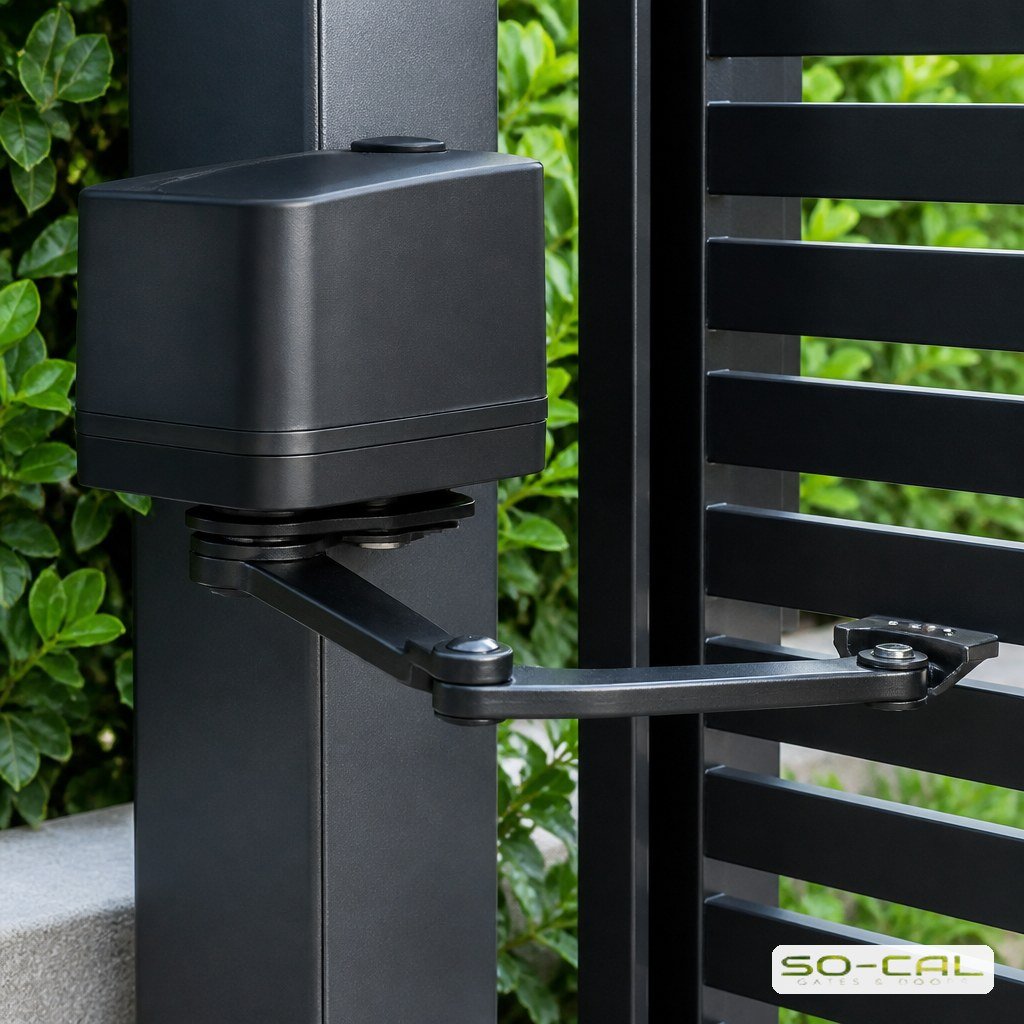
Operators are built for a specific gate motion and are not interchangeable. Sliding gates use rack and pinion or chain driven operators that pull the panel along its track. Swing gates use either articulated arm operators, which mimic the motion of an elbow, or ram style operators, which extend and retract like a piston. Arm operators suit gates with wide posts or unusual mounting conditions, while ram operators are compact and well suited to straightforward installations.
Decision 2: Power and Duty Rating
This is where most early failures originate. Every operator carries a maximum gate weight and length rating, plus a duty cycle rating that describes how many operations it can perform in a given period without overheating. Both matter, and the second one is routinely ignored.
Sizing the Motor to Your Gate
The goal is an operator that moves your gate comfortably rather than one that moves it barely, because the margin between those two states is what determines how long the motor survives.
Weight and Length Ratings
Never buy an operator rated exactly at your gate weight. A motor running permanently at the top of its capacity draws more current, generates more heat, and wears its gearbox faster than one running comfortably within its range. Building in headroom of at least twenty five percent costs a little more today and routinely adds years of service life.
Cycle Frequency
A gate that opens six times a day for one family is a completely different machine from a gate serving a busy household with teenage drivers, deliveries, and regular visitors. Count your realistic daily cycles honestly, including every arrival and departure, then choose an operator rated comfortably above that number rather than right at it.
The Duty Cycle Trap
Here is the failure that catches homeowners about a year in. A lightweight residential operator installed on a heavy gate or a busy driveway performs beautifully at first, then begins running hot, slowing down, and eventually stalling in the heat of the afternoon. Nothing is defective. The motor was simply specified for lighter duty than the property demands, and no adjustment fixes that.
Decision 3: Power Source and Backup
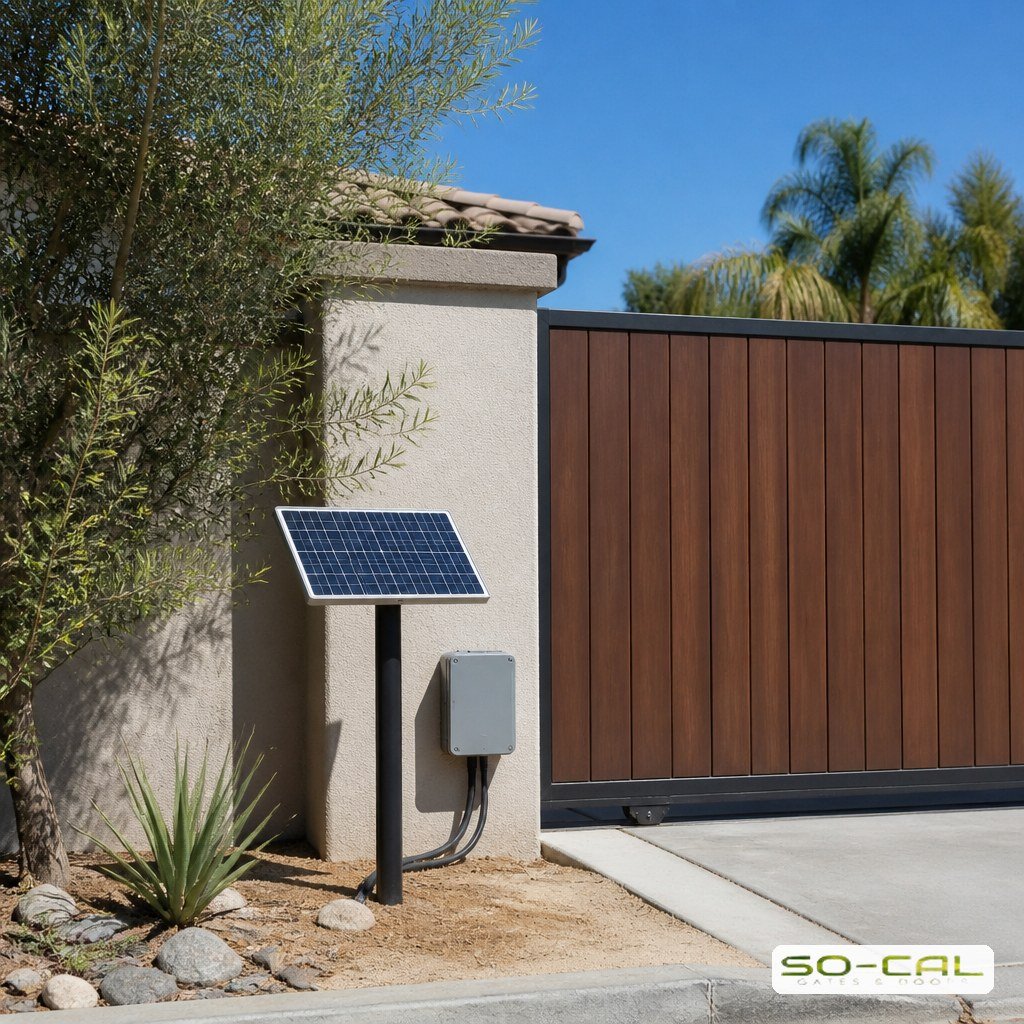
Most residential operators run on standard household current, which is straightforward when the gate sits near an existing supply. When the entrance is far from the house, running conduit and wire out to it becomes a real part of the project budget, and that is often where a solar powered operator starts to look attractive.
Battery backup is not an optional extra in our view. Without it, a power outage leaves you either stranded outside or trapped inside until you use the manual release, and outages rarely happen at convenient moments. A backup battery lets the gate complete a number of cycles on its own, and it is inexpensive at the time of installation compared to adding it later.
Decision 4: Safety and Access Features
Photo eye sensors and safety edges are mandatory, not upgrades. They stop and reverse the gate when something is in its path, and any installer who treats them as optional is one to walk away from. Beyond safety, the access features you choose shape how the gate fits into daily life.
Decide early whether you want a keypad for family and trusted visitors, an intercom to screen guests before opening, camera coverage at the entrance, or smartphone control for granting access remotely. These integrate cleanly when planned alongside the operator, and adding comprehensive access control later almost always costs more than including it from the start.
What Professional Installation Adds
An operator is a mechanical, electrical, and safety system rolled into one, and installing it well is a genuine trade skill. A professional confirms the operator is correctly sized for the gate, mounts it so the forces load properly, wires it to code, programs the limits and force settings, and tests every safety device before leaving the property.
That setup work is what separates a system you never think about from one that needs a service call every few months. It also protects your investment, since most manufacturers require professional installation for warranty coverage. Whether you are adding an operator to an existing gate or planning a complete automatic gate installation, the installation matters as much as the hardware you selected.
Quick Buying Checklist
Before you sign off on any operator, confirm these six points:
- The operator type matches your gate motion, sliding or swing.
- Weight and length ratings exceed your gate with headroom to spare.
- The duty cycle comfortably covers your realistic daily use.
- Power supply is planned, with battery or solar backup included.
- Photo eye sensors and safety edges are part of the quote, not an add on.
- Access features you actually want are specified now rather than retrofitted.
If a quote leaves any of these ambiguous, ask before you commit. A reputable installer answers all six without hesitation, because these are exactly the details they consider before recommending a model. For a closer look at how the hardware itself works once installed, our detailed gate opener installation service page covers the mechanics in depth.
Conclusion: Buying an Opener That Lasts
The heart of any gate opener buying guide is honest sizing. Match the operator type to your gate, give the motor real headroom on both weight and duty cycle, plan your power and backup properly, and never treat safety sensors as optional. Do those four things and the opener becomes a piece of equipment you simply stop thinking about. Want help specifying the right operator for your gate? Call SO-CAL Gates and Doors for a free assessment and a recommendation matched to your property.
Frequently Asked Questions
How much should I expect to spend on a gate opener?
It varies widely with the operator type, the duty rating, and the access features you include. A basic residential swing operator sits well below a heavy duty slider built for constant use, and keypads, intercoms, and cameras add to the total. The most accurate figure comes from an assessment of your specific gate and how you use it.
What size gate opener do I need?
Start with your gate weight, length, and daily cycle count, then choose an operator rated comfortably above all three rather than exactly at them. A margin of at least twenty five percent on weight prevents the motor from running at full strain, which is the single biggest factor in how long an operator lasts.
Are solar gate openers worth it?
They are excellent when the gate sits far from an existing power supply, since running conduit and wire over a long distance can cost more than the solar equipment itself. Our abundant sunshine makes them reliable here. For a gate close to the house with easy access to power, a standard wired operator with battery backup is usually the simpler choice.
Can I install a gate opener myself?
It is possible for someone with real electrical and mechanical experience, but it is rarely advisable. Correct mounting, code compliant wiring, and properly programmed force limits and safety sensors are what keep the system safe and durable. DIY installation also voids most manufacturer warranties, which removes your protection if something fails.
How long does a gate opener last?
A properly sized, professionally installed operator commonly runs fifteen to twenty years with basic maintenance. Undersized operators on heavy gates or busy driveways often fail within a few years. Keeping the track clear, lubricating moving parts, and testing the safety sensors periodically extends the life of any system considerably.