

Vinyl vs Wood Fence: Cost, Looks, and Maintenance
The vinyl vs wood fence decision comes down to a single honest question: would you rather pay less now and maintain it, or pay more now and forget about it? Both materials deliver full backyard privacy, both look good when installed well, and both are proven choices across Southern California. Where they genuinely differ is in what they ask of you over the next twenty years. Here is how they compare on the things that actually decide it.
Upfront Cost
Wood wins on day one, and usually by a comfortable margin. Standard pressure treated or cedar fencing costs noticeably less per foot than vinyl for the same height and coverage, which is exactly why it remains the default choice for homeowners fencing a large backyard on a defined budget.
Vinyl carries a higher material cost because the panels are manufactured rather than assembled from lumber. Installation labor is often comparable or slightly lower, since vinyl panels go up quickly, but the material difference is real and it is the main reason homeowners hesitate before choosing it.
Vinyl vs Wood Fence: The Lifetime Picture
Upfront cost tells you very little about what a fence actually costs to own. Once you account for maintenance materials, your own time, and eventual replacement, the ranking often reverses, and that is the comparison worth making before you commit.
What Wood Costs After Installation
A wood fence needs sealing or staining every two to four years in our climate, and each round means cleaning, prep, product, and a weekend of work or a contractor bill. Boards warp, split, or rot over time and get replaced individually. None of it is expensive in isolation, but it recurs for as long as you own the fence.
What Vinyl Costs After Installation
Essentially nothing beyond an occasional rinse. Vinyl does not need sealing, staining, or painting, it does not rot, and insects ignore it entirely. Barring physical damage, the fence you install is the fence you have in fifteen years.
Comparing Total Cost of Ownership
The clearest way to compare is to divide the total cost by the years of service you actually get from each option.
The Wood Math
Take the installation cost, add several rounds of sealing across the fence’s life, add occasional board replacement, and divide by a realistic lifespan of roughly fifteen to twenty years with good care. The annual figure lands higher than most homeowners expect when they compare quotes.
The Vinyl Math
Take the higher installation cost, add almost nothing, and divide by twenty five years or more. The annual figure frequently comes in below wood despite the larger cheque on day one, which is the single strongest argument in vinyl’s favor.
When Wood Still Wins Financially
If you plan to sell within a few years, if you genuinely enjoy maintaining your property, or if the budget simply will not stretch today, wood is the rational choice. Lifetime value only matters if you are the one who will be there to collect it.
Appearance and Customization
This is where wood keeps its strongest advantage. Natural grain has a warmth that manufactured material struggles to match, and wood can be stained any color, cut to custom heights, built in unusual patterns, and modified years later. For a rustic property, a craftsman home, or a design that needs to be bespoke, wood remains the better canvas.
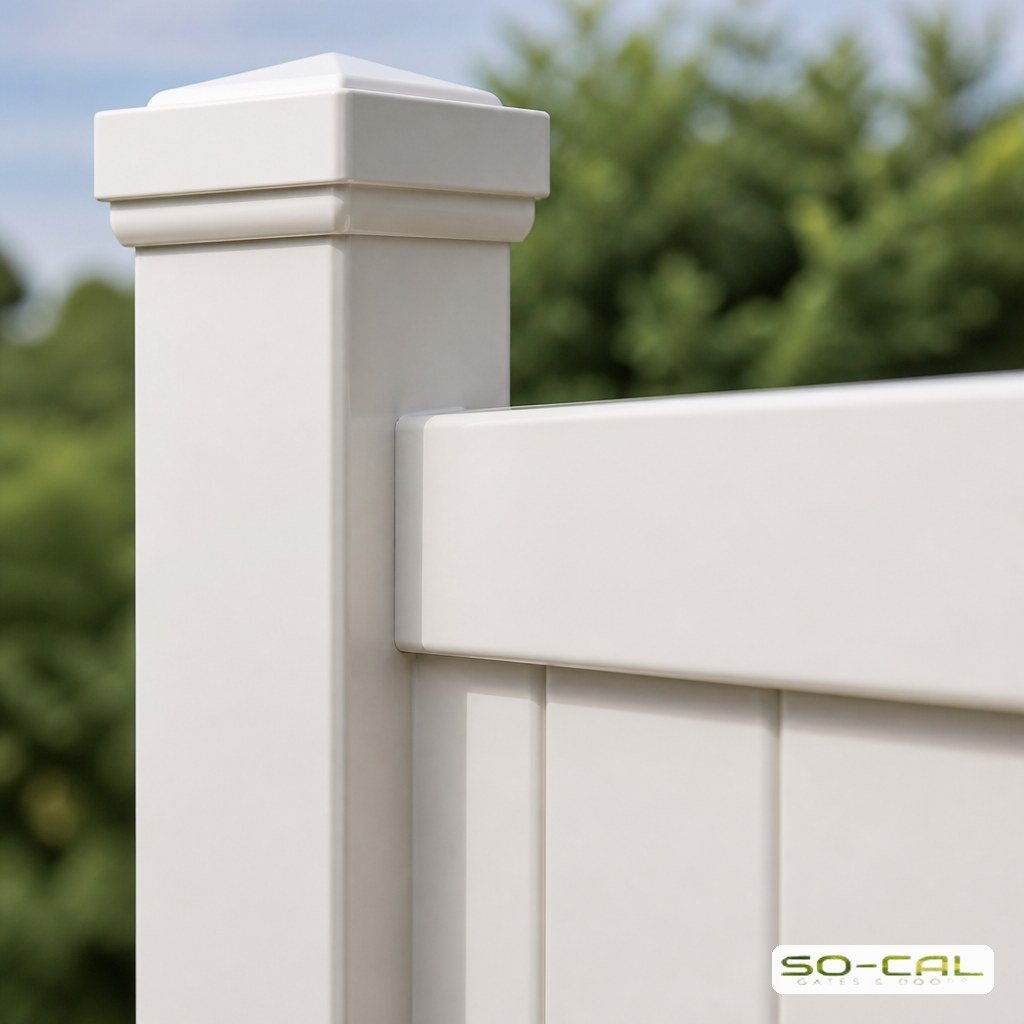
Vinyl looks clean, crisp, and consistent, which suits contemporary homes beautifully. It comes in a limited palette, most commonly white, tan, and grey, with a handful of profiles. Modern textured vinyl imitates wood grain far better than earlier generations did, but up close the difference is still visible to anyone looking for it.

Durability in Our Climate
Southern California is hard on wood. Intense year round sun dries and greys untreated boards, sprinkler overspray drives rot at the base, and the swing between dry heat and occasional heavy rain encourages warping. All of it is manageable with care, but the climate never stops working against the material.
Vinyl handles heat and moisture without complaint, though quality matters more than most buyers realize. Low grade vinyl can yellow or become brittle after years of UV exposure, while properly formulated panels hold their color and flexibility for decades. This is one product where paying for the better grade genuinely pays back.
Which Should You Choose
Set the two side by side against your own situation:
- Lowest cost today, or a custom design and stain: choose wood
- Lowest effort for the next twenty years: choose vinyl
- Selling within a few years: wood, since you will not collect the lifetime savings
- Staying long term in the home: vinyl usually wins on total cost
- Sprinklers hitting the fence line daily: vinyl, without much argument
Both are excellent fences when installed properly, and installation quality matters more than the material debate. Posts set to the right depth in concrete, correct spacing, and proper hardware determine whether either fence stands straight in ten years. Our team installs both, from vinyl fence services to traditional wooden fence installation, and can show you samples of each before you decide.
Conclusion: Making the Vinyl or Wood Decision
In the vinyl vs wood fence comparison, wood costs less today and offers unmatched customization at the price of ongoing maintenance, while vinyl costs more upfront and then quietly gets out of your way for decades. Decide based on how long you will own the home and how much upkeep you actually want to do, and either answer is a good one. Ready to compare them on your own property? Call SO-CAL Gates and Doors for a free estimate on both.
Frequently Asked Questions
Is a vinyl fence really cheaper in the long run?
Usually yes, if you stay in the home long enough. Vinyl costs more upfront but avoids repeated sealing and board replacement, so its cost per year of service often lands below wood across a twenty year horizon. If you plan to move within a few years, wood is the more economical choice.
How long does each type of fence last?
A well maintained wood fence typically lasts fifteen to twenty years here, less if it is neglected or sits in constant sprinkler spray. Quality vinyl commonly reaches twenty five years or more with minimal attention. Installation quality, particularly how the posts are set, affects both figures substantially.
Does vinyl fencing look cheap?
Quality vinyl looks clean and crisp rather than cheap, and modern textured profiles imitate wood grain convincingly from a normal viewing distance. Low grade vinyl is what gives the category its reputation, since it can yellow and flex. Specifying a good grade makes a substantial visual difference.
Can wood fences handle the Southern California sun?
Yes, with maintenance. Sealing or staining every two to four years protects boards from UV damage, drying, and warping. Keeping sprinklers off the fence line and ensuring good drainage at the posts extends its life considerably. Neglected wood in full sun deteriorates noticeably within a few years.
Which fence adds more value to a home?
Condition matters more than material. A well maintained fence of either type adds curb appeal and privacy that buyers value. Vinyl appeals to buyers who want nothing to maintain, while a beautifully stained wood fence suits traditional homes. A grey, warped wood fence detracts from value regardless of what it originally cost.