

Garage Door Repair in Riverside: Signs, Causes and Fixes
A garage door is the largest moving object on most homes, and it is usually ignored until the morning it refuses to open. Knowing what the early warning signs mean is what separates a routine fix from an emergency, and it is the difference between replacing a single worn part and replacing an entire system. This guide covers garage door repair in Riverside from the homeowner’s side: the symptoms worth acting on, what is actually failing underneath them, when repair stops making sense, and what a proper service call should include.
Garage Door Repair in Riverside Starts With the Signs
Garage doors rarely fail without warning. They get louder, slower, or slightly uneven for weeks before anything actually breaks. Because the change is gradual, most people stop noticing it — which is exactly why so many repairs end up being emergencies instead of scheduled visits.
The useful habit is to watch and listen to a full open and close once in a while. You are looking for three things: whether the sound has changed, whether the movement has changed, and whether the door still sits square in the opening when closed.
Changes in Sound
Sound is the earliest and most reliable signal. A door that has developed grinding, scraping or squealing is telling you something is dry, worn or out of alignment. A sharp bang during operation is more serious and usually points to a spring or cable problem, and a door making that noise should not keep being used until it has been looked at.
Changes in Movement
Movement problems are the second category, and they are what most people finally call about. The door hesitates partway, reverses for no reason, closes unevenly, or feels dramatically heavier than it used to. Each of these points to a different underlying cause.
When the Door Reverses or Sticks
A door that starts down and then goes back up is the most common single complaint, and it has two very different causes that are easy to tell apart once you know what to look for.
Safety Sensor Problems
Every automatic garage door has photo eye sensors near the floor on both sides of the opening. If the beam between them is broken, misaligned, or the lenses are dirty, the door will refuse to close and will reverse instead. This is the cheapest and most common cause, and it is often resolved by cleaning the lenses and realigning the brackets. If your door reverses only sometimes, or only in bright sun, suspect the sensors first.
Track and Roller Problems
The other cause is mechanical. Worn rollers, a bent track section or debris in the track will make the door bind at the same point in its travel every time. The tell is consistency: sensor faults tend to be intermittent, while a track or roller problem shows up at the same height on every cycle. Left alone, a binding door forces the opener to work against the obstruction until something more expensive gives way.
Why Local Conditions Accelerate Both
Inland Empire garages take a specific kind of punishment. Fine dust settles on sensor lenses and in tracks continuously, and the temperature swing between a summer afternoon and a winter night is enough to change clearances and dry out lubricant faster than in milder climates. Doors here genuinely need attention more often than the manufacturer’s generic schedule suggests, and most of that attention is cleaning and lubrication rather than parts.
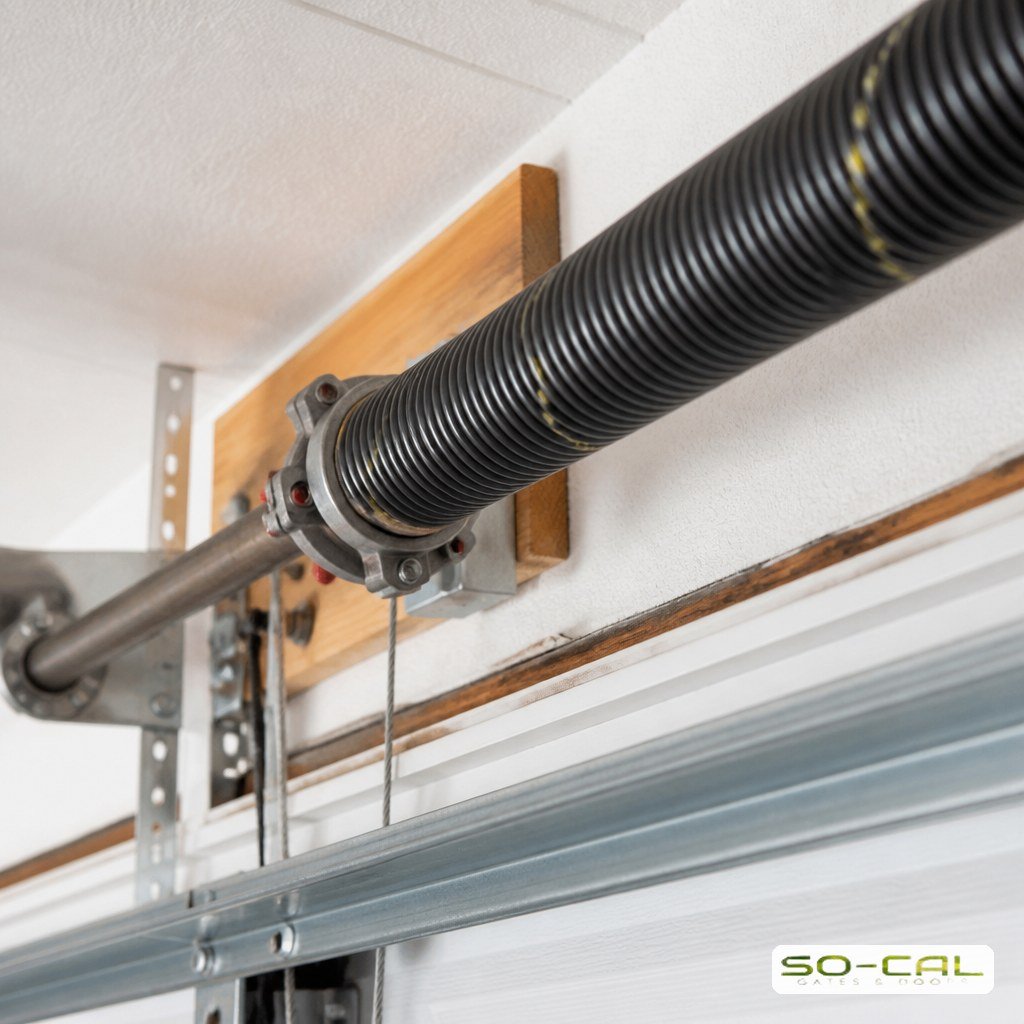
What Actually Breaks
Underneath the symptoms, a small number of components account for the large majority of garage door repairs. Knowing which one is involved tells you how urgent the situation is and roughly how big the job will be.
Springs and Cables
Springs do the real work. They counterbalance the weight of the door so the opener only has to overcome friction rather than lift the whole panel. They are also wear items with a finite number of cycles, and when one breaks the door becomes extremely heavy and genuinely dangerous to operate. Spring and cable work is the one area where a homeowner should not experiment: these components are under high tension, and releasing that tension incorrectly causes serious injuries every year. A door that suddenly feels far heavier, or that will not stay open partway, should be left alone until a technician sees it.
The Opener
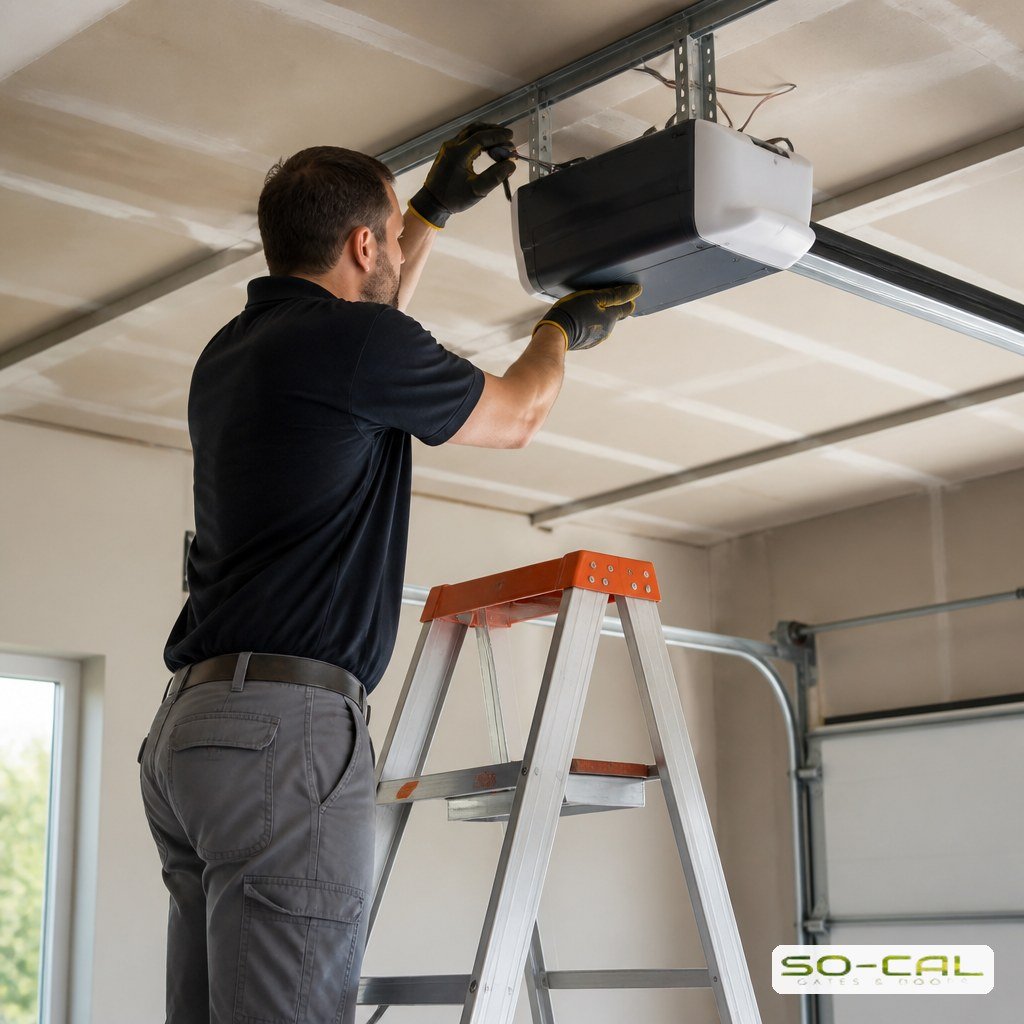
The opener is the motor unit, and it fails in more gradual ways: straining, running without moving the door, responding inconsistently to the remote, or losing its travel settings. Many opener complaints turn out not to be the opener at all — an opener struggling against a binding door or a failing spring looks like a motor problem while being a symptom of something else. That is why diagnosis should start with the door balance and the hardware rather than with the unit on the ceiling.
Rollers, Hinges and Weather Seal
The supporting cast wears steadily and cheaply. Rollers seize, hinges loosen, and the bottom weather seal hardens and cracks, which lets dust and water into the garage and is usually the easiest item on the list to put right. None of these will strand you, but all of them make the system noisier and harder on the opener while they are neglected.
Repair or Replace, and What a Service Call Involves
Most garage door problems are repairs, not replacements. Springs, rollers, sensors, cables and openers are all serviceable items, and replacing one of them on an otherwise sound door is straightforward work. Replacement becomes the better answer when the panels themselves are damaged or rusted through, when the door is so old that matching parts are scarce, or when repeated repairs have started stacking up on the same system.
A proper service call is diagnostic before it is anything else. The technician should disconnect the opener and test the door’s balance by hand, inspect springs, cables, rollers, hinges and track alignment, test the safety reverse and the photo eyes, and check the opener’s force and travel settings. If someone quotes a part over the phone without seeing the door, they are guessing. Homeowners who also want the entry secured properly often pair the visit with garage door lock service, since the lock and the opener are part of the same security picture.
If the door does turn out to be past economical repair, replacement is its own project with its own decisions about material, insulation and hardware, and it is worth treating separately rather than as an upsell during a repair visit. The same applies to a new install on a garage that has never had an automated door — see garage door installation for what that involves, and home door installation if you are upgrading entry doors at the same time.
Conclusion: Act on the Noise, Not the Failure
Garage doors give plenty of warning before they break, and almost every expensive repair started as a cheap one that was ignored for a season. If your door has become louder, slower, heavier or less predictable, that is the moment to have it looked at — not the morning it will not open. And if a spring has already gone, stop using the door entirely until a technician has seen it. For garage door repair anywhere in Riverside, Corona or the surrounding area, call SO-CAL Gates & Doors for a free assessment and an honest recommendation on whether to repair or replace.
Frequently Asked Questions
Why does my garage door reverse before it closes?
Nearly always the safety sensors. Dirty lenses, a knocked bracket or something breaking the beam will make the door refuse to close and reverse instead. Clean both lenses and check that the indicator lights are steady. If the problem happens at the same point in the travel every time rather than randomly, the cause is more likely mechanical binding in the track.
Is a broken garage door spring dangerous?
Yes. Springs hold a great deal of stored tension, and once one breaks the door loses its counterbalance and becomes extremely heavy. Do not try to force the door open, and do not attempt to replace or adjust springs yourself — this is the component that causes the most serious garage door injuries. Leave the door closed and have it handled by a technician.
How often should a garage door be serviced?
Once a year suits most households, and more often for a door used many times a day. Local conditions matter too: dust and heat here are hard on sensors, rollers and lubricant, so doors in the Inland Empire generally benefit from attention slightly more often than a generic schedule suggests.
Should I repair or replace my garage door?
Repair is usually the right answer. Springs, rollers, cables, sensors and openers are all replaceable on an otherwise sound door. Replacement makes sense when the panels are damaged or rusted, when parts for an older model are hard to source, or when the same system keeps needing work. A technician who inspects the door can tell you which situation you are in.
My opener is straining. Does it need replacing?
Not necessarily, and it is worth checking before you buy one. An opener straining against a door that is out of balance, binding in the track, or running on a weak spring will look exactly like a failing motor. Testing the door’s balance by hand with the opener disconnected is the first diagnostic step, and it frequently redirects the repair to a much cheaper part.
Can I lubricate the door myself?
Yes, and it is the one bit of maintenance worth doing between visits. Use a garage door lubricant on rollers, hinges and springs, and keep it off the track itself, which should simply be wiped clean. Avoid general household oils, which attract dust and make the problem worse in a dusty garage.