

Pool Fence Guide: Safety, Style, and California Requirements
A pool fence is the one piece of fencing where the stakes are genuinely serious. It is a legal requirement in California, it is the primary barrier between a curious child and open water, and it is also a highly visible feature of your backyard that you will look at every single day. Getting it right means satisfying safety requirements without turning your outdoor space into an enclosure. Here is what the rules ask for and how to build a barrier that does its job well.
Why the Barrier Matters More Than Anything Else
Drowning prevention research consistently points to the same conclusion: a properly built and maintained isolation barrier is the single most effective safeguard around a residential pool. Supervision matters enormously, but supervision has gaps, and a barrier works during exactly those gaps. That is the entire logic behind the requirements.
The key word is isolation. A fence that separates the pool from the house and yard performs far better than a perimeter fence around the whole property, because it keeps working when a back door is left open. This distinction is what most homeowners underestimate when planning a backyard.
What a Compliant Pool Fence Requires
California requirements are specific, and local jurisdictions can add to them, so confirming with your building department before ordering is always the right first step. That said, the core specifications are consistent enough to plan around.
Height and Spacing
Barriers generally need to reach at least sixty inches in height measured from the outside, with gaps narrow enough that a small child cannot squeeze through and no horizontal elements on the outside face that would create a climbing ladder. Vertical picket designs satisfy this naturally, which is why they dominate pool fencing.
Gate Requirements
The gate is where most compliance failures occur, and it deserves more attention than the fence itself.
Self Closing and Self Latching
A pool gate must close and latch by itself every time, without anyone having to think about it, and it must open away from the pool.
Latch Height and Position
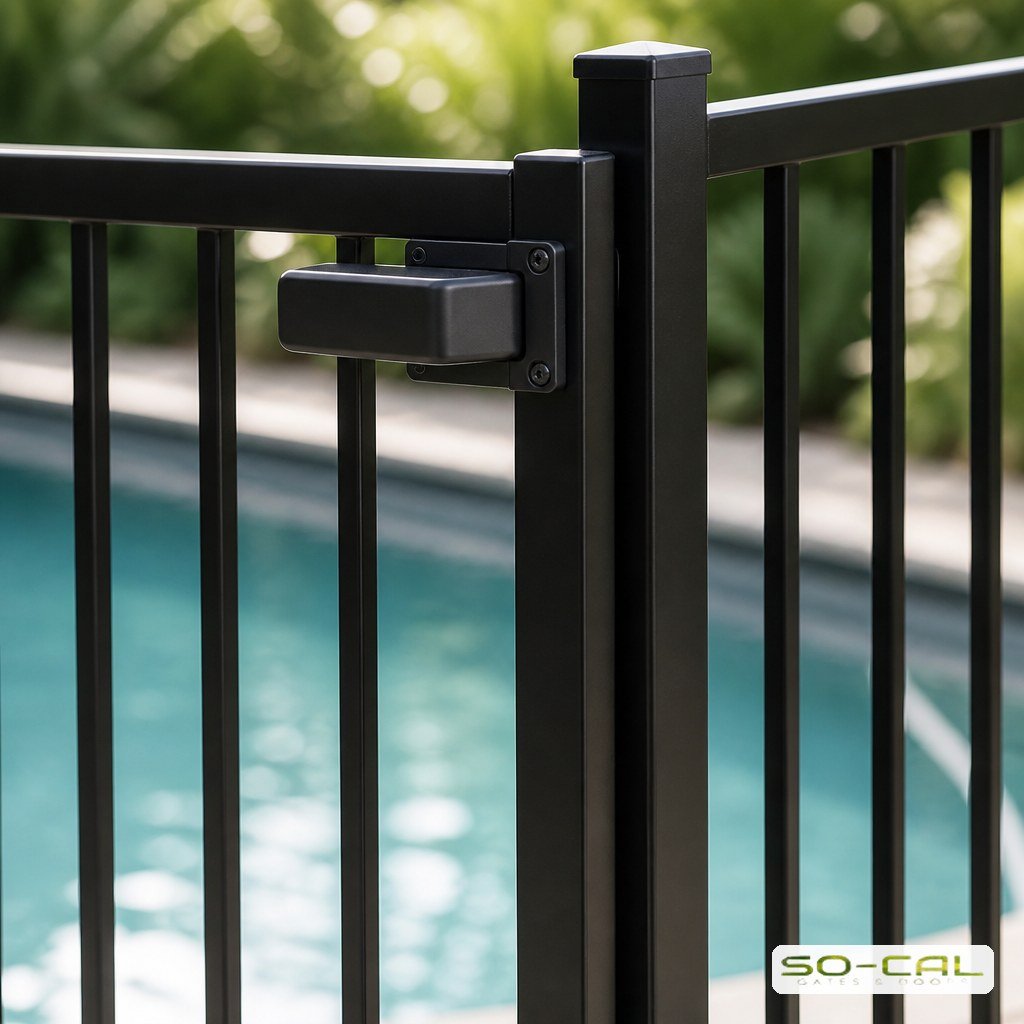
The latch sits high, typically at least sixty inches above the ground, or on the pool side of the gate positioned so it cannot be reached through or over the barrier. The intent is simple: an adult opens it easily, a young child cannot.
Hinges and Closing Force
Self closing hinges need enough tension to shut the gate fully from any open position and latch it positively. Hinges lose tension over time, which is why testing the gate is part of routine maintenance rather than a one time check at installation.
The Most Common Failure
By a wide margin, the most common compliance problem is a gate propped open for convenience during a party or a landscaping job and never restored. A barrier that is not closed is not a barrier, and this single habit undoes an otherwise perfect installation.
Choosing the Right Material
Pool environments combine constant moisture, splashed chlorinated water, and full sun, which rules out some materials quickly and rewards others.
Aluminum is the practical winner for most backyards. It does not rust, its powder coated finish shrugs off pool chemicals and UV, and vertical picket designs meet safety requirements while keeping sightlines open so you can see the pool from the house. Wrought iron delivers a more ornamental look and real strength but needs vigilant maintenance in a wet, chlorinated environment where corrosion accelerates.
Style Without Sacrificing Safety
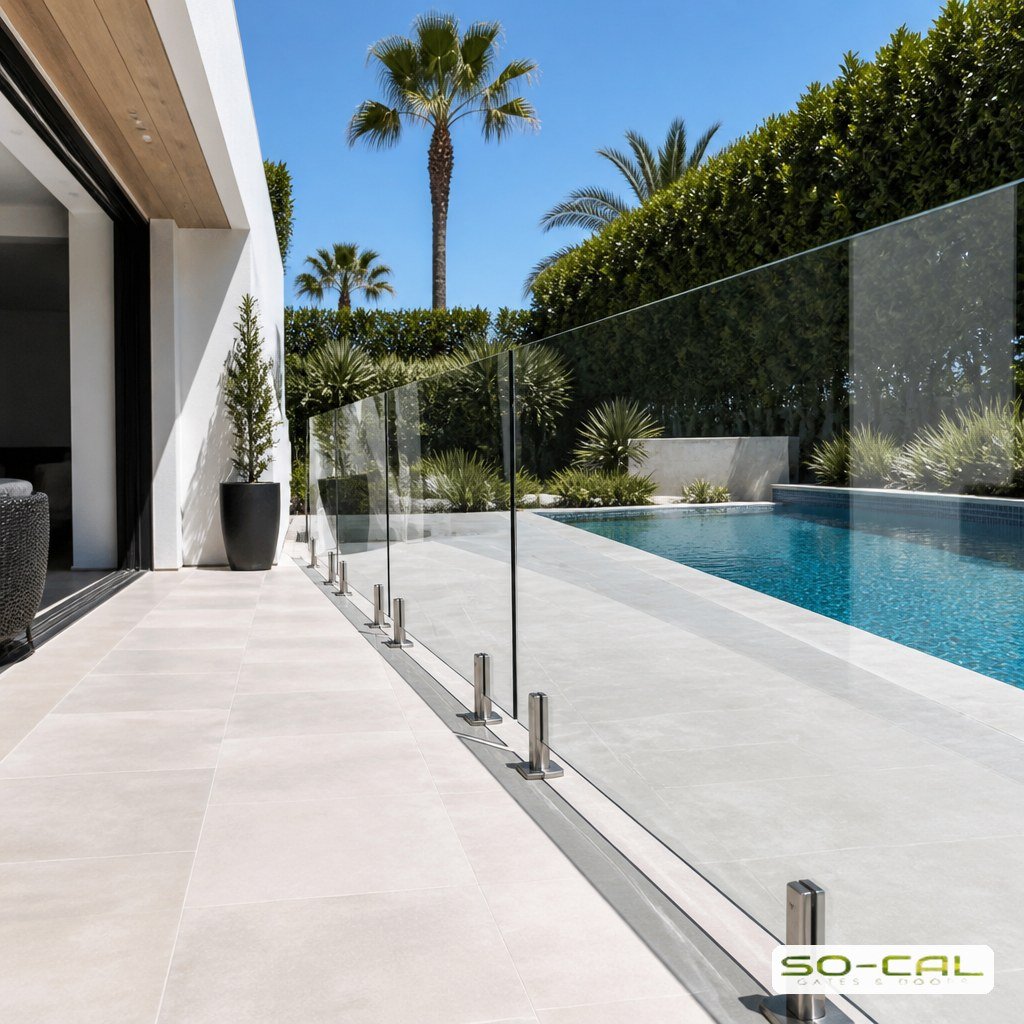
A safety barrier does not have to look like one. Frameless glass panels preserve the view almost entirely and suit contemporary backyards, at a higher cost and with regular cleaning to keep them looking their best. Slim profile aluminum in a dark finish visually recedes against landscaping far better than a lighter color.
Landscaping helps enormously too, provided it is planted on the outside of the barrier rather than against it, since shrubs beside a fence create a climbing aid. Coordinating the pool barrier with your other fencing keeps the whole yard reading as one design instead of a compliant enclosure dropped into it.
Maintaining a Barrier That Keeps Working
A pool fence is one of the few things around a home where maintenance is a safety matter rather than a cosmetic one. Build a short routine and stick to it:
- Test that the gate self closes and latches from a fully open position
- Check hinge tension and adjust when the gate slows or fails to latch
- Confirm no furniture, planters, or equipment sit against the outside face
- Inspect for loose pickets, damaged panels, or gaps that have opened up
- Rinse aluminum or glass to remove chemical residue and mineral spotting
Any of these taking more than a few minutes means it is time for a repair rather than an adjustment. A gate that latches unreliably is functionally an open gate, and it should be fixed the same week rather than added to a list. Professional fence installation and repair handles both the initial build and the hardware servicing that keeps it compliant.
Conclusion: Building a Pool Barrier You Can Rely On
A good pool fence satisfies California requirements, isolates the water from the house and yard, uses materials that survive chlorine and sun, and gets tested regularly so the gate never quietly stops latching. Choose aluminum for most backyards, confirm local requirements before ordering, and treat gate hardware as safety equipment. Planning a pool barrier? Call SO-CAL Gates and Doors for a free assessment and a compliant, attractive design.
Frequently Asked Questions
How tall does a pool fence need to be in California?
Barriers generally need to be at least sixty inches high measured from the outside, with restricted gap widths and no external horizontal elements that could be climbed. Local jurisdictions sometimes add requirements, so confirming with your building department before ordering is always worth the phone call.
What are the gate requirements for a pool fence?
The gate must be self closing and self latching, must open away from the pool, and the latch must sit high enough or be positioned on the pool side so a young child cannot reach it. Gate hardware is where most compliance failures happen, so it deserves careful specification and regular testing.
Which material is best for a pool fence?
Aluminum suits most backyards. It does not rust, handles chlorinated splash and UV without deteriorating, and vertical picket designs meet safety requirements while keeping sightlines open. Glass is the premium option for preserving views, and wrought iron looks superb but needs vigilant maintenance around water.
Can I use my existing perimeter fence as the pool barrier?
Sometimes a property line fence can form part of the barrier if it meets height, gap, and climbability requirements. However, an isolation barrier that separates the pool from the house performs considerably better in practice, because it keeps working even when a back door is left open.
How often should I check my pool gate?
Monthly is a sensible rhythm, and more often during heavy use season. Test that the gate closes fully and latches from any open position, check hinge tension, and confirm nothing has been placed against the outside face. A gate that latches unreliably should be repaired immediately rather than scheduled.