
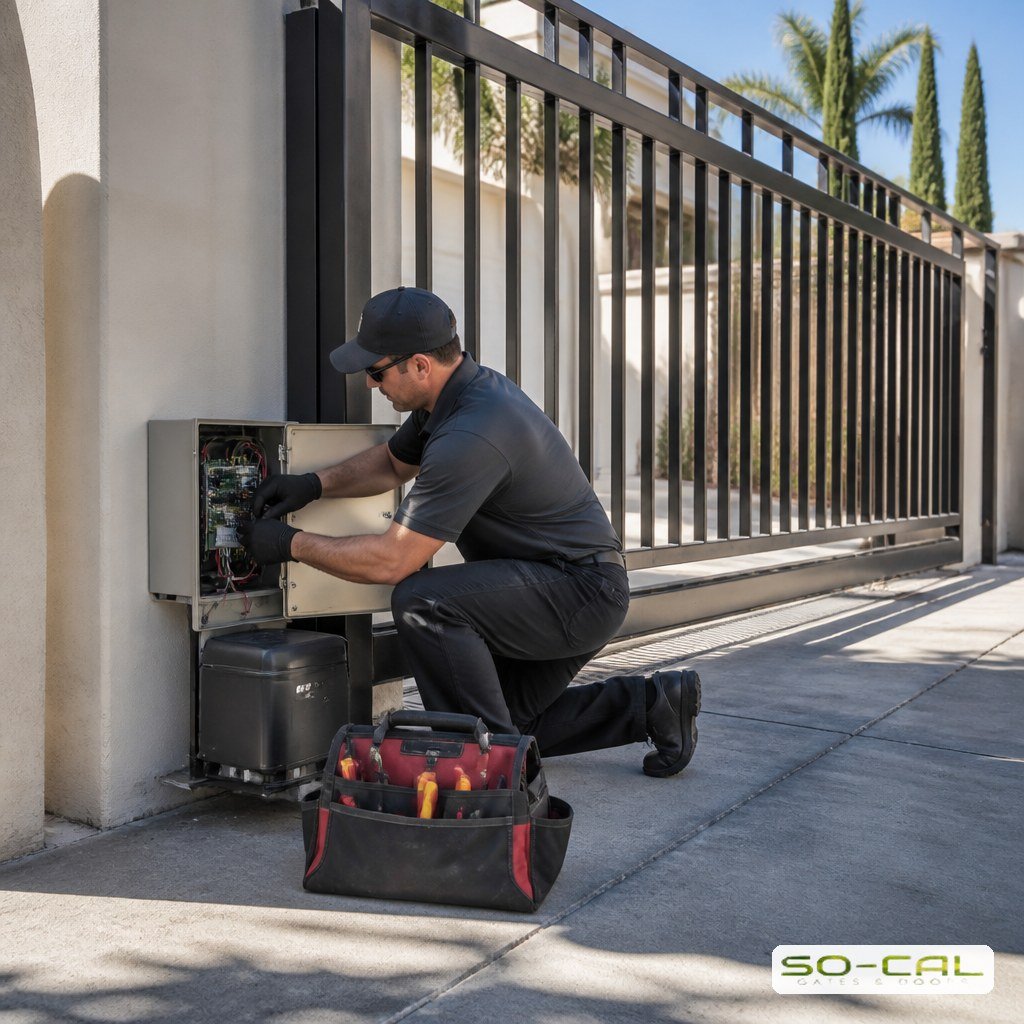
Gate Repair: Common Faults, Costs and When to Call
A gate that has stopped working is rarely a mystery once someone knows where to look. Most gate repair work comes down to a short list of components that wear in predictable ways, and the difference between a small bill and a large one is usually how long the problem was left running. This guide covers what actually fails, how the answer changes depending on whether your gate swings or slides and whether it is automated, when a call is genuinely urgent, and what moves the price of the job.
What Gate Repair Usually Turns Out to Be
Gates are simple machines carrying a lot of weight through a lot of cycles, and they fail at the points where that weight is transferred. Four areas account for the large majority of calls: what the gate hangs or rides on, the drive that moves it, the safety devices that stop it, and the structure holding it all up.
Diagnosis matters more than it might seem, because these systems disguise each other. An operator that sounds like it is dying is very often a healthy operator fighting a gate that has gone out of alignment. Replacing the motor in that situation fixes nothing and costs the most.
Support: Hinges, Rollers and Posts
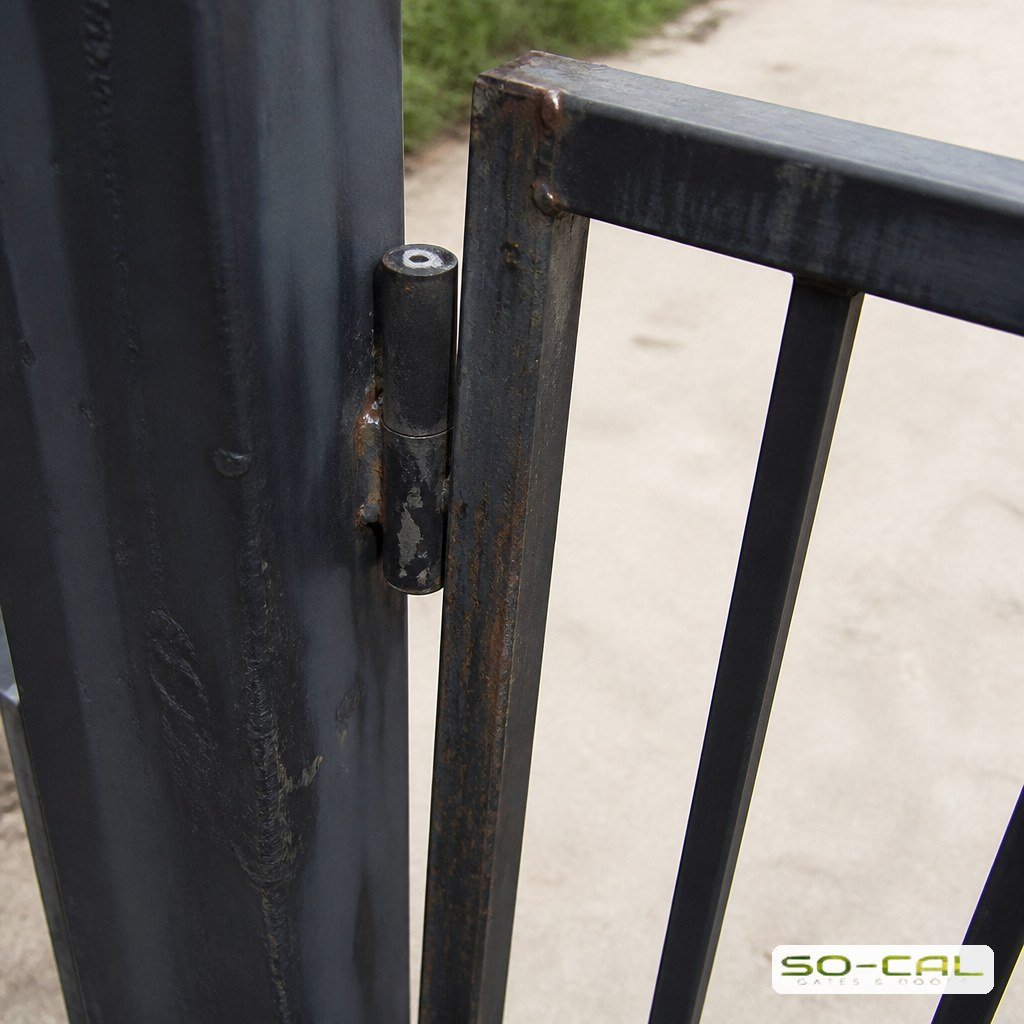
On a swing gate, the hinges and the post carry everything. Worn hinge pins let the leaf drop, and once it drops it stops meeting the latch and starts dragging. On a sliding gate the same job is done by rollers and either a ground track or cantilever assemblies, and worn rollers are the single most common cause of a gate that has become noisy or sluggish.
Posts are the failure nobody expects. A post that has shifted, rusted at the base or was never set deep enough will pull the whole gate out of square, and no amount of adjustment elsewhere will correct it. This is the one repair where the fix is genuinely structural.
The Drive and Operator
On an automated gate the operator is the expensive component, and it fails in stages rather than all at once. It starts straining, then running hot, then stopping partway, then not responding at all. Control boards fail more abruptly, often after a power surge, and the symptom is usually a gate that has power but ignores every input.
Telling a Motor Problem From a Mechanical One
There is a quick test that saves a great deal of money, and any competent technician will do it before quoting anything.
Disconnect and Move It by Hand
Release the manual disconnect and move the gate through its full travel by hand. A healthy gate moves smoothly with moderate effort and does not bind at any point. If it is heavy, catches, or grinds, the problem is mechanical and the operator has simply been working against it. Fixing the mechanical fault often makes the motor symptoms disappear entirely.
Watch Where It Stops
If the gate always stops at the same point in its travel, suspect an obstruction, a worn roller or a bent track section at that spot. If it stops at random points, or only in certain weather or light conditions, the cause is far more likely to be electrical or a safety sensor being triggered.
Why Guessing Gets Expensive Here
The operator is the most costly part and the easiest to blame, which is why it gets replaced more often than it needs to be. A gate that destroyed one motor by binding will destroy the replacement too, usually within a couple of years, and the owner concludes the brand was poor. Insisting on a by-hand balance test before any part is quoted is the single most useful thing a homeowner can do to keep a repair honest.
Safety Sensors and Electrical Faults
Photo eyes and edge sensors are the most common source of complaints that are not really faults. A gate that refuses to close, or reverses partway, is usually being told by a sensor that something is in the way. Dust on a lens, a bracket knocked out of alignment, or strong low sun hitting the receiver will all do it, and all three are cleaning and adjustment jobs rather than parts jobs.
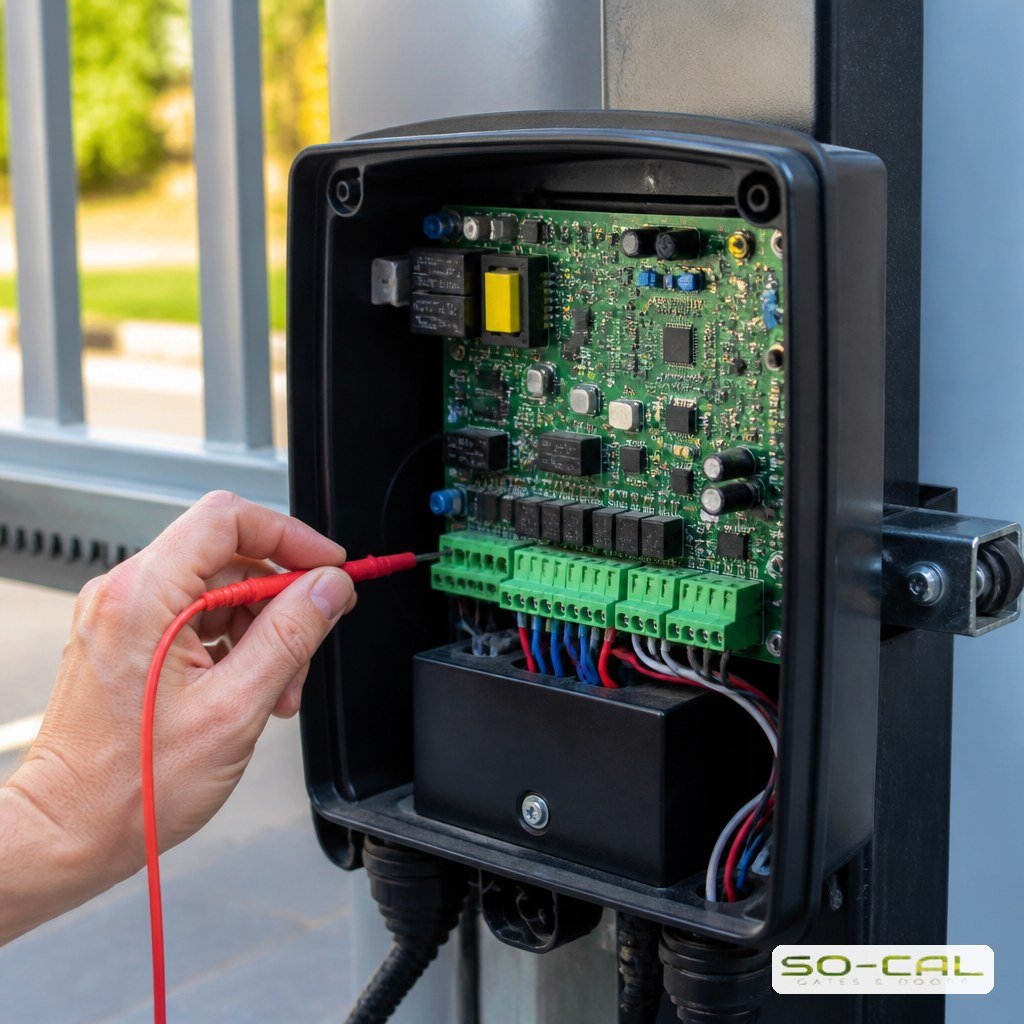
Genuine electrical faults show up differently: intermittent response, a gate that works from the keypad but not the remote, or nothing at all after a storm. Those point to wiring, the control board or the power supply, and they are worth diagnosing properly rather than replacing components in sequence.
Emergency Versus Scheduled Repair
Not every gate fault is urgent, and treating everything as an emergency costs more than it needs to. The dividing line is whether the gate is unsafe or whether it has stopped doing its job entirely.
- Call immediately: a gate stuck open, a gate that has come off its track or hinges, a broken spring or cable, or any gate that closes on an obstruction without reversing
- Call soon: grinding or scraping noises, visible sagging, a gate binding at a fixed point in its travel
- Schedule it: intermittent remote range, slow operation, cosmetic rust, a latch that needs a firm push
- Do it yourself: cleaning sensor lenses, clearing debris from a ground track, lubricating hinges and rollers
A gate stuck open is the case that justifies an emergency call on its own, because the barrier is simply not there any more and the property is open. A gate stuck closed is inconvenient but rarely a security problem, and it can usually wait for a scheduled visit once the manual release has been used. For a shared or commercial entrance the calculation changes, because a failed gate blocks access for everyone, which is exactly why commercial gate repair is normally covered by a response-time agreement rather than handled call by call.
What Moves the Price of a Repair
Gate repair is quoted per job rather than from a price list, because the same symptom can have very different causes. Understanding the variables makes a quote much easier to judge.
The main drivers are which component failed, whether the gate is manual or automated, whether the part is a common item or specific to an older operator, how accessible the installation is, and whether the work is diagnostic or a straight replacement. Parts availability is the one that surprises people most: an operator from a discontinued line can turn an ordinary repair into a replacement conversation simply because nothing matches.
The other cost driver is time. Almost every expensive gate repair started as an inexpensive one that ran for a season. Worn rollers wreck a motor. A dropped gate wears its own hinges faster. A sensor bypassed to stop nuisance reversing removes protection that was there for a reason. An annual service visit is the cheapest item in the whole ownership cost, and it is the one most often skipped. If your gate is genuinely at the end of its life, replacement is its own decision, and it is worth pricing automatic gate installation properly rather than repeatedly repairing a system that has already told you what it thinks.
Conclusion: Diagnose Before You Replace
Most gate repairs are small mechanical jobs that were allowed to become large ones. The pattern is consistent: a support component wears, the gate goes out of alignment, the operator absorbs the extra load, and eventually the most expensive part in the system fails. Insist on a by-hand balance test before any part is quoted, treat noise as information rather than annoyance, and put an annual service in the calendar. For gate repair anywhere in Riverside, Corona and the surrounding area — or a straight answer on whether repair still makes sense — call SO-CAL Gates & Doors for a free assessment, and ask about gate opener installation and service if the operator has reached the end of its life.
Frequently Asked Questions
Why has my gate suddenly stopped closing?
The most common cause by far is a safety sensor. If the beam between the photo eyes is broken, misaligned or the lenses are dirty, the gate will refuse to close and often reverses instead. Clean both lenses and check the indicator lights first. If the gate stops at the same point every time rather than refusing outright, the cause is more likely mechanical.
Is it cheaper to repair or replace a gate?
Repair is usually the better value. Rollers, hinges, sensors, cables and operators are all replaceable on a sound gate. Replacement makes more sense when the frame or posts have failed structurally, when the operator is from a discontinued line with no available parts, or when the same system keeps needing work each season.
How urgent is a gate that is stuck open?
Treat it as urgent. A gate stuck open provides no security at all, which is different from a gate stuck closed — inconvenient, but the barrier is still doing its job. If yours is stuck open and cannot be moved by hand after using the manual release, that is a same-day call rather than a scheduled visit.
Can I repair a gate myself?
Some of it, yes. Cleaning sensor lenses, clearing a ground track, and lubricating hinges and rollers are all reasonable homeowner tasks and prevent a large share of faults. Anything under tension — springs and cables in particular — and any mains electrical work should be left to a technician, because those are where the serious injuries happen.
How often should a gate be serviced?
Once a year for a residential gate, and more often on a busy or commercial entrance. Local conditions matter: dust here settles on sensor lenses and in tracks continuously, and heat dries out lubricant faster than a generic maintenance schedule assumes, so gates in the Inland Empire benefit from slightly more frequent attention.
Why does my gate work sometimes and not others?
Intermittent behaviour usually points to something electrical or environmental rather than mechanical. Common culprits are a failing remote battery, low sun striking a photo eye receiver, moisture in a connection, or a control board that has started to fail. Mechanical faults tend to be consistent and repeatable, so intermittency is itself a useful diagnostic clue.