

Iron Railing Replacement in Riverside: A Practical Guide
Railings are the part of a property nobody thinks about until one moves under their hand. On stairs, balconies and raised walkways they are a safety component with real code requirements behind them, not a decorative trim. Iron railing replacement comes up most often when rust has taken hold at the base of the posts, when a railing has loosened enough to feel unsafe, or when a renovation makes an older railing look out of place. This guide covers how to judge which of those you have, what replacement involves, and what the alternatives to traditional iron actually change.
When Iron Railing Replacement Beats Repair
Plenty of railing problems are repairable, and it is worth knowing which side of the line you are on before getting quotes. The distinction usually comes down to whether the structure is sound and only the surface has suffered, or whether the load-bearing parts have been compromised.
Surface rust on otherwise solid metal, a single damaged section, a loose handrail bracket or a tired finish are all repairs. Replacement becomes the answer when corrosion has gone through the section rather than sitting on it, when several posts have loosened at their bases, or when the railing no longer meets current requirements and is being altered anyway.
How Rust Is Actually Assessed
The question is not whether there is rust — on an older exterior railing here there always is — but whether the metal underneath still has its section. Surface rust cleans back to sound steel and takes a new finish. Rust that has scaled, flaked or eaten through leaves less metal than the railing was designed with, and no amount of coating restores that.
Where to Look First
Corrosion is not evenly distributed, and checking the right places tells you most of what you need to know in a couple of minutes.
The Base of Every Post
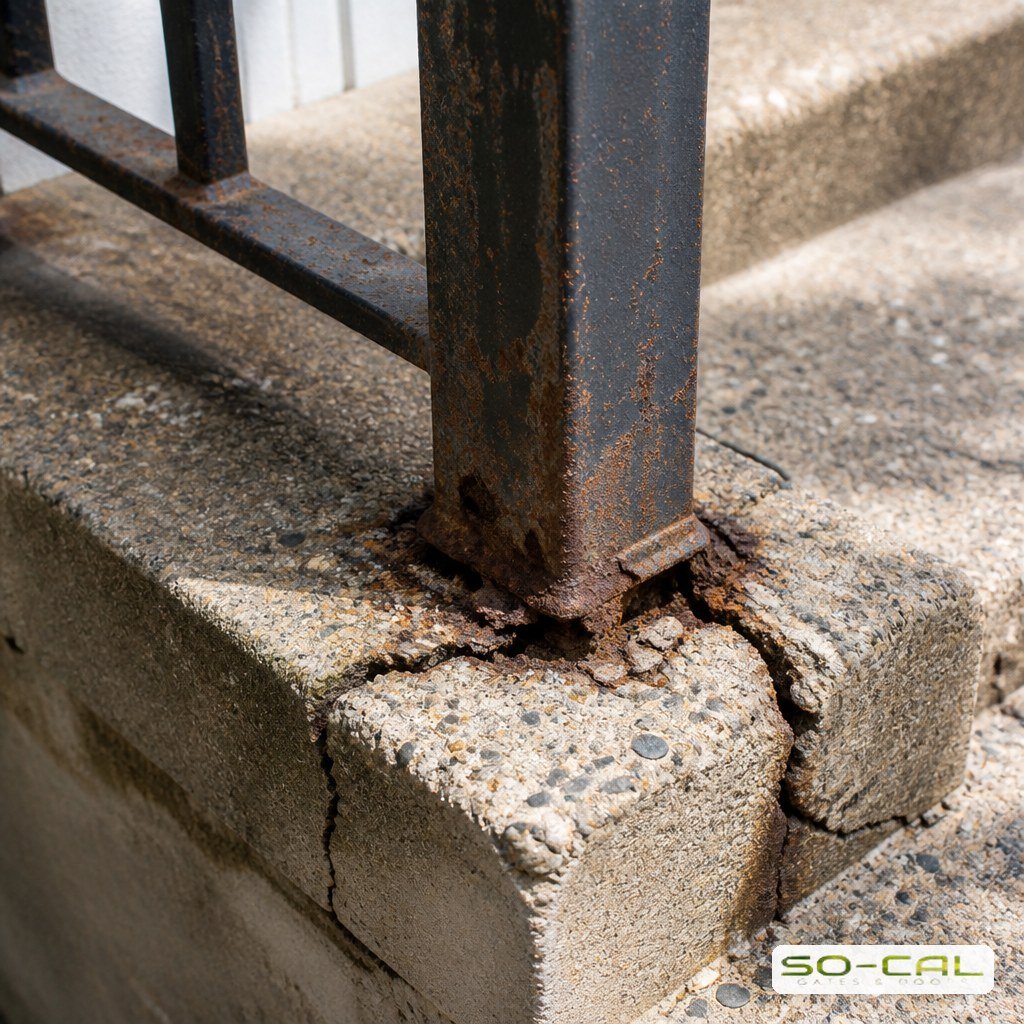
Where a post meets concrete is where railings die. Water sits at the joint, and on posts set into a core-drilled hole it wicks down inside where nothing can be seen. The tell is rust staining spreading from the base, or concrete that has cracked and lifted around the post — expanding corrosion inside the hole is strong enough to split the concrete, and once that has happened the fixing is gone.
Welds and Joints
The second place to check is every weld, particularly where a picket meets the top rail. Welds that were never dressed and sealed properly collect moisture and corrode from the inside of the joint outward. Tapping along the railing and listening for a dull rather than a sharp note is a crude but effective way of finding sections that have lost material.
The Movement Test
Grip the railing at the top of a run and push firmly, both along it and away from it. A sound railing is essentially rigid. Any visible movement at the base, any flexing at a joint, or a creaking sound means the assembly is no longer doing what it exists to do. A railing that moves is not a cosmetic problem to schedule for later — it is the specific failure mode that leads to falls, and it should be addressed as a safety item rather than a maintenance one.
Code, Height and Spacing
Railings on stairs, balconies and raised areas are governed by building code, and the requirements exist because of a specific hazard rather than as a formality. Height, the spacing between vertical members, and how much load the assembly must resist are all specified.
The two requirements homeowners encounter most are minimum height, which differs between a stair rail and a guard on a raised area, and maximum spacing between pickets, which is set so that a small child cannot pass through. Older railings frequently do not meet current spacing requirements, which is one reason a replacement often looks visually denser than the railing it replaced.
The important practical point is that a replacement is generally expected to meet current requirements even where the original was installed under older rules. Exact figures vary by jurisdiction and by whether the railing is a guard or a handrail, so confirm what applies to your property with the local building department or with an installer who works in that jurisdiction routinely. Where the railing ties into other ironwork, matching it to existing ornamental iron keeps the property visually coherent.
Materials and What Each One Changes
Traditional iron is not the only option, and each alternative trades something different. The right choice depends on where the railing is and what you want it to do visually.
Iron and Steel
Still the default for good reason: strong, repairable, endlessly customizable, and able to carry ornamental detail nothing else matches. It rusts wherever the finish is broken, so the coating system and the detailing at the base are what determine its life. A powder-coated railing with properly sealed post bases and good drainage lasts a very long time in this climate. Matching a new railing to existing wrought iron fencing on the same property is straightforward with iron and considerably harder with anything else.
Aluminum
Aluminum does not rust, which removes the failure mode that ends most iron railings. It is lighter and needs almost no maintenance. The trade-offs are that it is softer, ornamental detail looks less convincing, and it is harder to repair locally if it does get damaged. On a balcony where access for maintenance is awkward, that low upkeep is often decisive.
Glass and Cable
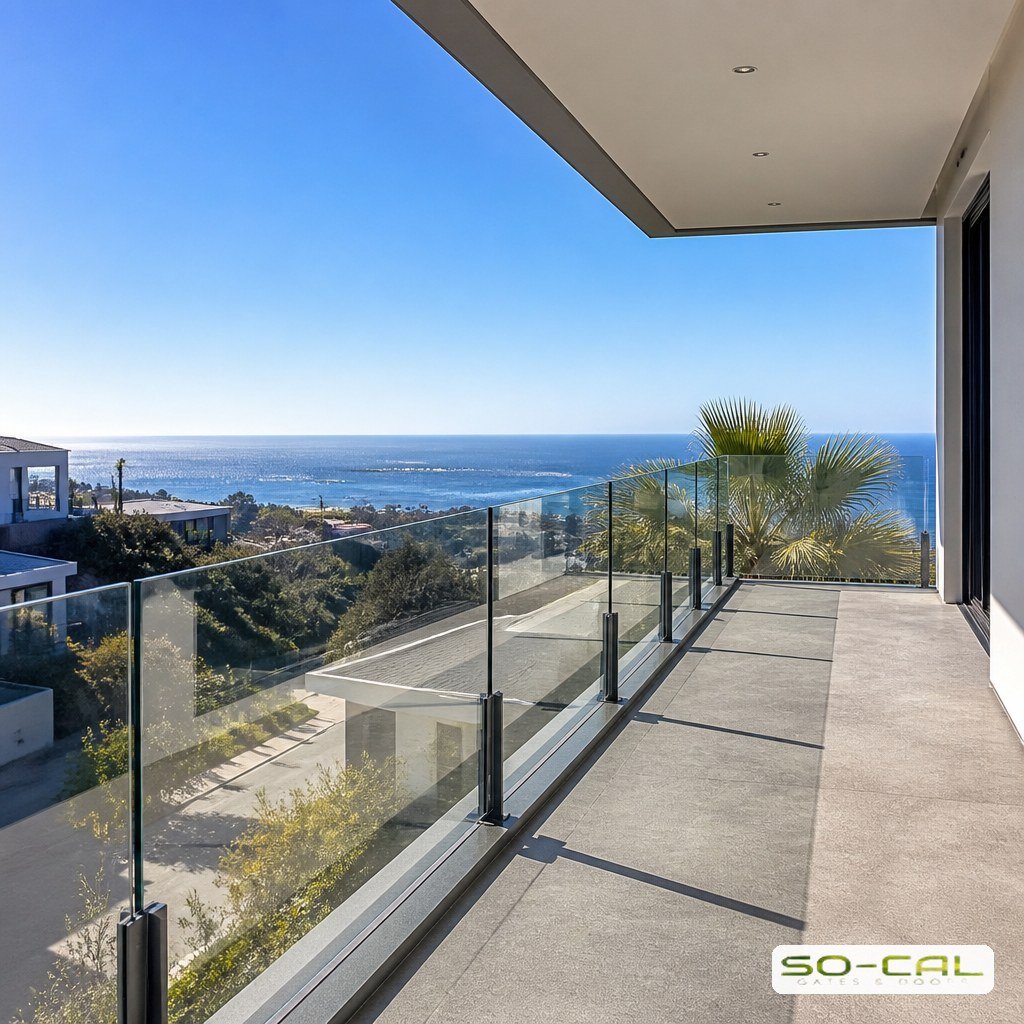
Glass panels and horizontal cable are chosen for sightlines rather than for durability — they preserve a view that pickets interrupt, which on a balcony overlooking anything worth seeing is the whole point. Both carry their own code considerations: glass must be the correct safety type and supported as designed, and cable systems have to be tensioned properly and spaced to meet the same requirements as pickets. Neither is a straightforward swap into an existing iron post layout, so they are design decisions rather than material substitutions.
Conclusion: Judge It by the Posts, Not the Paint
The condition of an iron railing is decided at the base of its posts and at its welds, not by how the finish looks from a distance. If the posts are sound, refinishing buys many more years for a fraction of the cost of replacement. If they have corroded through or the concrete around them has split, no finish will help and replacement is the honest answer. Above all, treat a railing that moves as a safety item rather than something to schedule. For an assessment, repair or full railing installation in Riverside, Corona and the surrounding area, call SO-CAL Gates & Doors for a free evaluation.
Frequently Asked Questions
How do I know if my railing needs replacing or just refinishing?
Check the base of every post and push firmly along the railing. If the posts are solid and the rust is surface-level, refinishing is the sensible route. If posts move, concrete has cracked around them, or rust has eaten through the section rather than sitting on the surface, the structure has been compromised and replacement is the correct answer.
What height does a railing have to be?
It depends on whether the railing is a stair handrail or a guard on a raised area, and the requirements differ between the two. Figures also vary by jurisdiction. Because a replacement is generally expected to meet current requirements even if the original predates them, confirm the applicable numbers with your local building department or an installer who works there regularly.
Why do railing posts rust from the bottom?
Because water collects where the post meets concrete and, on core-drilled installations, wicks down inside the hole where it cannot dry or be seen. Corrosion then expands within the confined space, which is what cracks the surrounding concrete. Proper sealing and drainage at the base is the single detail that most determines how long an exterior railing lasts.
Is aluminum a good substitute for iron railing?
In many situations yes. It does not rust and needs very little maintenance, which is a real advantage on balconies and anywhere access is awkward. The compromises are that ornamental detail is less convincing, it is softer than steel, and it is harder to repair locally. Where the railing needs to match existing ironwork, iron remains the easier choice.
Can I replace just one section of railing?
Often yes, particularly where a single run was damaged by impact. The practical difficulties are matching the profile and the finish, since older sections weather and colours drift. If several posts across different runs are failing, replacing the whole railing usually gives a better result and costs less than repeated partial repairs.
How long does a railing replacement take?
The installation itself is usually short, and the lead time sits in fabrication and finishing. A railing is measured on site, made to those measurements and then coated, which takes weeks rather than days. Custom ornamental work and non-standard finishes extend it further, so it is worth starting the process before the railing becomes urgent.